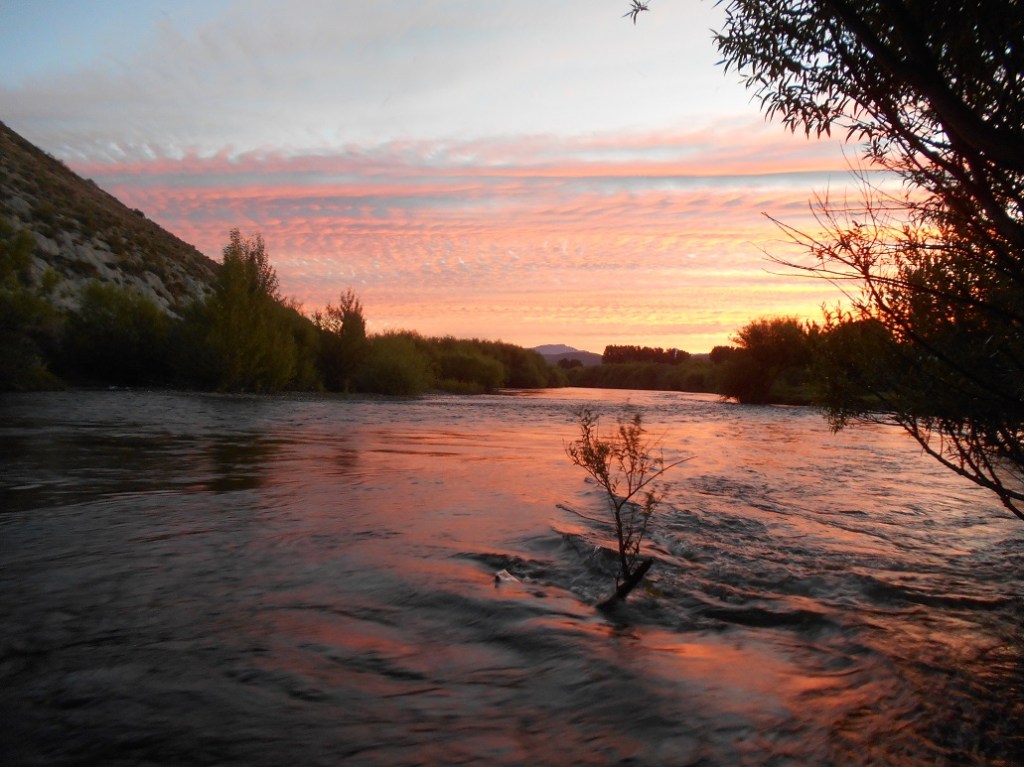
I decided to leave Patagonia. I was camping along a river outside of the town of Junin de Los Andes in the province of Neuquin, Argentina.
I had been researching the PLANdemic hoax for 5 months at an internet cafe while trying to contact different estancias (large ranches) for a place to visit and possibly live. Because of the fear-porn all over the media, I could not find anyone willing to accept a stranger. Everyone was too afraid of an outsider bringing in some deadly disease.
I had been getting disturbing reports from neighboring Chile: The Fall of Chile
Also, one of my favorite journalists, Whitney Webb, had just evacuated from Chile because of how bad it was. She got out just before they closed the borders. She describes what it was like in this interview.
In Argentina the news was bad too:
The military were reportedly deployed all over the country to restrict the transportation of goods and people. Police had set up roadblocks throughout the country and were depriving some areas of fuel, food and other supplies due to the ¨pandemic.¨ It was impacting people. In one province (Formosa), in the north of Argentina, healthy people (asymptomatic) were being abducted as ¨suspected COVID carriers.¨ They were being held in what were literally dubbed ¨concentration camps¨ for weeks and ¨tested¨ until they were considered safe.
It also seems that billionaires recognize Patagonia as a refuge and were unfortunately moving into the area to buy up land. (The Dark Secret Behind a British Billionaire’s “Parallel State” In Argentina’s Patagonia).
Argentina and Chile have both had episodes of fascism under military dictatorships. I started thinking I had better find somewhere else to be.
Winter was approaching and I needed to have a plan.
I had listened to an interesting discussion by two paleo dudes from the US spending some time with the hunter-gatherer tribe, the Hadza, in Tanzania, Africa.
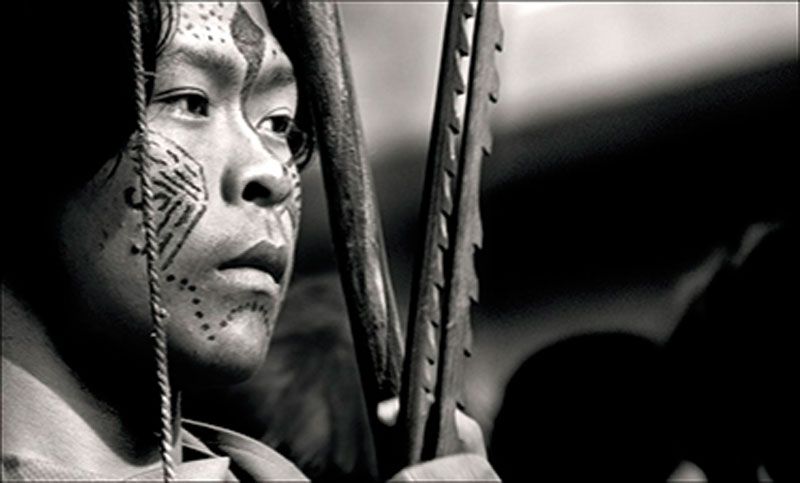
Inspired by that video I decided to look for a hunter-gather group that was mentioned in the video, the Aché in Paraguay. The tribe was north of me by about 1,370 miles (2,205 kilometers) in a straight line as the crow flies. Actual travel distance on the ground would be several times that distance.
I was not wanting to use buses because they have WiFi and were being fumigated with toxic chemicals in an attempt to kill a phantom virus. I am also not willing to comply with stupid Covid protocols. I have a zero tolerance policy for Covid bullshit. Plus there were serious travel restrictions that would unexpectedly pop up along the roads. I was not going to use planes for the same reasons (high EMF exposure, Covid nonsense including: fumigations, PCR ¨tests¨, quarantines).
I needed a way to travel that would allow me to bypass police and military road blocks.
I talked to a friend who sells horses and decided that this would be my best option. I bought 2 horses through her. One horse to ride and the other to carry my supplies and equipment for camping in the winter while traveling north, out of Patagonia.
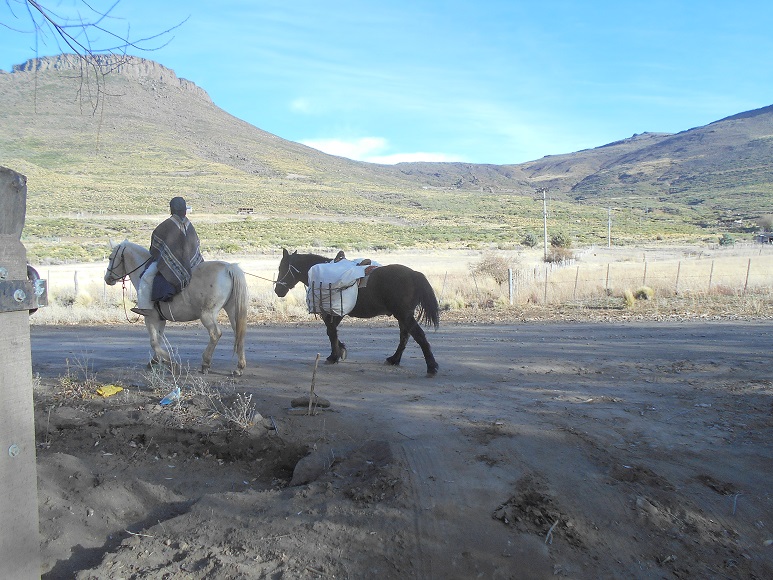
She set me up with a saddle and saddle bags for the cargo along with other supplies for the trip. I packed along a few tools for cutting through fence as needed.
I started my trip north in June 2021. Periodically I would rest the animals near some town and try to conduct research on the Aché at an internet cafe.
I came across a book:
Ache Life History: The Ecology and Demography of a Foraging People
I did an internet search for the author Kim Hill who is a professor of anthropology at Arizona State University. He informed me that the Aché are no longer living in the forest and are settled onto 6 reservations and Christianized. In fact 3 of the reservations are Christian sponsored. I lost interest in seeking out the group.
Kim and I exchanged a few emails about other possible groups in Paraguay, such as the Ayoreo-Totobiegosode Indians. According to Survival International this part of Paraguay has the fastest disappearing rain forest habitat in the world based on satellite photos. The situation seemed complex with the few Ayoreo left avoiding outsiders. Large Brazilian companies have been buying up the land, running bulldozers through the forest to mark out property perimeters, then throwing up fences and stocking the forest land with cattle. Mennonites are among the on-the-ground colonizers there. As I looked into the situation more it seems very bleak as the Paraguayan government has done little to step in and provide a protected zone. I am not sure what I could do there as the economic and social forces contributing to rain forest destruction seem strong. There is a high probability that I could not find the Ayoreo that are in hiding and even if I could find them, then what? Join them in a state of perpetual fleeing? Convince the few of them left to mount some form of resistance? It all seemed very messy and complicated.
Around this time, with me asking around and networking I came across paleo nutritionist Trevor Connor (The Paleo Diet), based out of Colorado who was curious about my ¨research.¨
I wrote him this letter to explain my intent to find a hunter gather group:
Hi Trevor,
I am not conducting research per se.
I am not a doctor, anthropologist or nutritionist. I have interest in all of those fields and read a fair bit from each.
My primary motivation is getting out of civilization. I want to be outside of the system when it collapses. Every civilization has collapsed (21, if I remember correctly) and I expect we are not more than a few years out from the collapse of this civilization.
I am interested in learning how to live as our ancestors lived as this way of life makes sense to me.
From a biological perspective our species is on a path of extinction. Whether you are focused on epigenetic and disease trends (infertility/genetic damage/nervous system problems); the accumulative effects of the increase in artificial electromagnetic radiation on our bodies and environment; glyphosate/neonicotinoids and the thousands of other industrial pollutants and heavy metals accumulating in our land, air, water, food chain, bodies; degradation of the nutritional value in food due to mono-culture agriculture´s destruction of the soil; the stress and negative thinking prevalent in society; etc. All indicate an emerging health crisis to match an emerging planetary ecological crisis that is difficult to fully imagine in terms of the amount of suffering and death that will occur (is occurring).
While anthropologists expect the last of the hunter gatherers to be assimilated in the next 20-30 years, I expect we will have many changes in the world before then. Depending on how the dominoes fall, if the system breaks down in certain ways, it may open up space for people that live on the periphery of empire. They may be able to continue and I think there is a good chance that if humanity survives at all, the seeds of the future lie with these groups that live outside of civilization. They will likely be the only ones that have maintained sufficient biological integrity to produce healthy future generations.
I am on this planet to protect life and to try to save our species.
The life of Bruno Manser is roughly in the ballpark of what I am imagining. (https://theecologist.org/2020/feb/10/day-bruno-manser-disappeared)
Depending on what actually occurs with climate change, those in the Amazon may not be able to continue living there. Unfortunately, the climate debate is politicized like the Covid debate with special interests churning out junk science to support their particular narrative. There are intelligent people with a high level of integrity on both sides of the climate debate. The question is: who has the better data? Or who is basing their beliefs on bogus science?
In any case, my current goal is to select a group and attempt contact. If I am not killed and allowed to live among a group, I will attempt to adopt the customs and practices while being vigilant to guard the group from the temptations of the modern world (Coka Cola, television, cell phones, etc.) and to guard against logging and other resource extractors.
I may not like living in the Amazon with it´s poisoness snakes, piranhas, jaguars, crocodiles, mosquitos, etc. The wildlife is a bit intense. I may decide on a different plan for my life but for now I would like to try life in the Amazon.
With that in mind, I am happy to document the lifestyle, food choices, culture, etc. to share with the outside world. Do you have a specific series of questions or research protocol in mind? I have not looked into how anthropological nutrition research is conducted.
Luke
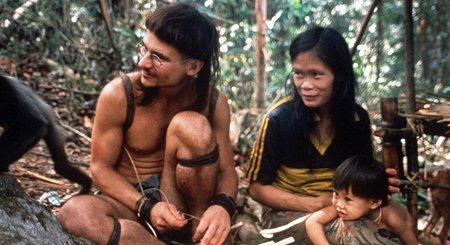
Bruno Manser
After that I got in touch with another anthropologist Robert Walker who specializes in Amazonian tribes.
I told him that I was specifically looking for a forager (hunter-gather) group, as the social culture of these groups is universally egalitarian and I feel that they are more in-sync with the natural world.
Robert helped me identify the known hunter-gatherer groups in South America:
Massaco in Rondônia – Sirionó (Isolados do rio São Simão)
Rio Pardo in Mato Grosso and Amazonas – Isolados do Rio Pardo (Tupi–Guarani–Kawahibi)
Arariboia and Caru in Maranhao. Awa-Guaja isolados
Mashco Piro (second half of video)
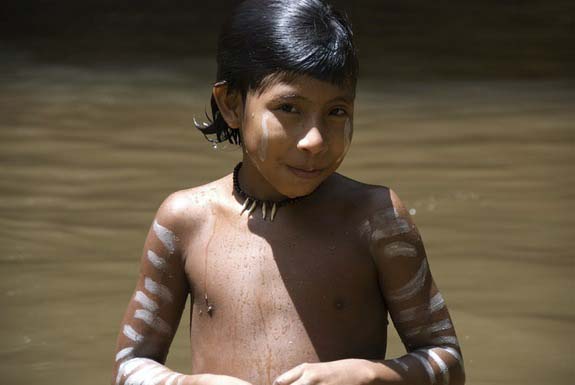
Awa child.
Unfortunately all of the hunter-gather groups in South America that are still foraging seem to be uncontacted and all but the Mashco Piro seem to be in hiding due to attacks from loggers or other intruders. After some consideration I decided not to contact an uncontacted group for 3 reasons:
- The potential for the spread of disease from me to the group. I read this paper from Nature about first contact epidemics: https://www.nature.com/articles/srep1403232
- The unavoidable negative cultural impacts.
- The risk of being killed as a stranger.
While I would prefer to live with a hunter-gatherer group, with the exception of the Hadza in Africa, it seems that the remaining hunter-gatherers in the world are basically uncontacted.
Realizing that this was the situation, my plans of contacting a hunter-gather group collapsed.
Now the question was, where to go, what to do?
A friend working in the Amazon in Peru to preserve ethnobotanical knowledge sent me this report about his area:
¨Indigenous hunters these days use shotguns a lot. A lot of the river people are artisanal net fishermen, and the Amazon seems to be teeming with fish. One of the tribal groups that my colleagues work with are the Matses. Many if not most of the ayahuasca retreat centers employ an indigenous healer to prepare the various medicines and lead ceremonies, of whom many are Shipibo. Both groups seem to be thriving in the 21st century through an adaptive process of taking what they want and can use from modern Western culture: motors for their travel canoes, chainsaws, small generators. The rivers of course are the highways and the Main Streets of the Amazon Basin. Remaining remote tribes are, well, remote. The gentle mestizo mixing of genetics is still very much on the indigenous side. Lovely people.
Another contemporary community feature is a significant number of gringos from all over the world who have come for the Medicine and stayed for relative peace and quiet of jungle life. With over a hundred such centers, many of them working on inventing a sort of Amazonian permaculture, based on indigenous foods. The banana has been quite a dietary game changer since it’s arrival and rapid dispersal a couple of hundred years ago.
A core practice associated with the plant medicine path is the dieta, studying and building a personal relationship with a particular plant, under the tutelage of ayahuasca, called “the Plant Teacher” and a knowledgeable curandero or vegetalista. Some of the foreign practitioners have been there for decades, sincere and disciplined life-long learners. I would be glad to introduce you to some of those folks, they are friends and colleagues for whom I have much admiration.
The culture in general, usually much closer to hunting and gathering than cultivation as we think of it, which for me can be challenging when it comes to dependability. But there’s a happy medium, an easy-going lifestyle, and the opportunity to take personal practice to the field.¨
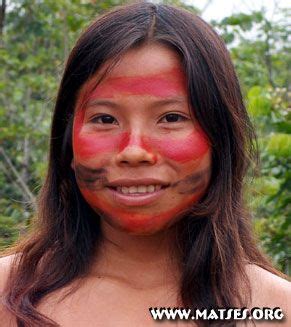
So my current plan is to visit my friend in Peru and see if there is a community that is living in harmony with nature, is of a high level of consciousness, is motivated to safeguard the planet and the future for all of creation. Finding a community free of cell phones or willing to give them up once learning about the harms caused by the technology.
——————————–
I am in Cochabamba, Bolivia, at the moment. I am about 2/3 through the country of Bolivia. So far, so good.
Cochabamba was once the site for some furious fights against water privatization. The ¨people¨ won. (Photos)
I remember reading reports of street protesters throwing dynamite at police (or was it military lines).
Writer Chellis Glendinning has made Bolivia her home. She tells me that it is because of the ¨spirit of the people¨ here that she decided to leave the US for Bolivia.
From my vantage point, I don´t see what she sees. There is no shortage of face-diaper Covidiots here, as in every other city I have visited post PLANdemic. It does seem that there is less overall compliance with Covid nonsense in Bolivia among the general population, compared to Argentina. But the more distinct divide in both countries is between urbanites and country folk, with the country folk seeming to be a bit more sensible and noticeably mostly devoid of masks.
Cochabamba is just one more ugly city with too much traffic, junk commodities from China, lots of people chugging Coka Cola, and a thick saturation of cell towers to feed the seemly universal consumer base of cell phone junkies. Just one more population group marching to extinction.
I can´t wait to move on.
 escape del imperio
Thanks Luke, Keep us updated. You seem to be one of the few adventurous, un-brainwashed people around. Safe travels. Love,
Michael “Skeeter” Pilarski Permaculture – Wildcrafting – Medicinal Herbs & Seeds
PO Box 1133 Port Hadlock, WA 98339 (360-643-9178 Ecosystem Restoration Course this June! http://www.friendsofthetrees.nethttps://friendsofthetreesbotanicals.com/https://globalearthrepairfoundation.org/https://www.nwherbalfair.com/
LikeLike
Hi Luke,
Much enjoyed reading this update especially the linked article about British billionaire activities in Patagonia. I note that you’ve made it to Cochabamba. I admire your tremendous persistence in seeking a place/community to escape to but am not optimistic that you will ever find a place that fulfills your very extreme criteria. I hope I’m wrong and wish you all the best. If you ever come my way (Buenavista, Santa Cruz) you will be a most welcome guest. I look forward to the next instalment of your blog. Kind regards Chris Carden WhatsApp +591 76005089
LikeLike