Featured

Imagine A Toxin

This was a talk that I gave during my final weeks in the USA

About 80 people attended this talk in June 2019 at the Port Townsend Community Center, Washington

IMAGINE A TOXIN:

That you can’t see or smell. That you probably can’t hear. You might taste something metallic in your mouth at times. [1] Some of you might be able to feel it but you may not know what the cause is. [2]

It’s a toxin that is virtually everywhere in modern society.

This toxin was present at your birth and is exponentially increasing with each generation.

It is a toxin that is addictive much like hard drugs are addictive. [3]

It may cause a loss of empathy, meaning that it is possibly creating a society of sociopaths. [4]

There are widespread neuropsychiatric effects from this toxin. The effects that are the best documented include: sleep disturbance/insomnia, headache, depression/depressive symptoms, fatigue/tiredness, dysesthesia (an abnormal sense or touch or pain cause by lesions of the nervous system: “burning, wetness, itching, electric shock, and pins and needles”), concentration/attention dysfunction, memory changes, dizziness, irritability, loss of appetite/body weight, restlessness/anxiety, nausea, skin burning/tingling/dermographism (a subset of hives: an allergic-like reaction, causing a warm red wheal to appear on the skin) and EEG changes in the brain. [5] How many people do you know that complain of these symptoms? Any long-time clinician or psychologist will tell you that these phenomena are becoming epidemic.

Our cognitive ability, our ability to have proper brain function is being attacked by this toxin. It is rendering us increasingly incapable of addressing the cascading series of crises that the planet is facing.

It causes sterility. The mechanisms are diverse, from tissue remodeling of the testes and ovaries, lowered sex hormones, cell death, lower sperm count and quality, lowered libido and an increase in spontaneous abortion. [6] We already have sperm count drops to below 50% of normal in every technologically advanced country on earth according to a 2017 meta-analysis. [7]

Reproductive rates have fallen below replacement levels in every technologically advanced country in the world, with a single exception (Israel). These include every EU country, the U.S., Canada, Japan, South Korea, Taiwan, Singapore, Australia and New Zealand. Reproduction averages, in these countries, is about 73% of replacement levels according to 2015, 2016, and 2017 data. [6, 8] As fertility precipitously decreases, the artificial fertilization industry is growing rapidly. [9]

A study on mouse reproduction showed that exposure at doses well within our current safety guidelines produced substantial dose-dependent decreases in reproduction within the first set of litters; further exposure produced dose-dependent complete or almost complete sterility that was found to be largely irreversible. [6, 10]

Based on the data of 18 scientific reviews regarding the reproductive effects of this toxin we will see a crash in human reproduction to almost zero in about 5 years. [6]

It might be the most potent carcinogen that we are in common contact with. A Swedish review from 2013 observed that, “No other environmental carcinogen has produced evidence of an increased risk in just one decade.” [11] For comparison, it typically takes about 30 years to develop lung cancer from smoking. Therefore this toxin is 3 times as carcinogenic as smoking. [12]

This toxin causes permanent DNA damage (19 reviews). It has been estimated that if mutation rates increase 2.5 to 3 times the normal level, we will go extinct. Much of humanity may already be living in environments where they are experiencing this level of genetic mutation. [6] What this means is that all of our evolutionary wisdom, everything that our ancestors survived through to bring our lives into existence, billions of years of our heritage and genetic wisdom is being deleted permanently from our gene pool. This is a desecration of life, of our bodies, of our heritage and our future.

There is well-established evidence correlating this toxin to biological impacts including: oxidative stress, which has roles in almost all chronic diseases (17 reviews); cardiac effects; widespread endocrine (hormone) disruption (11 reviews); onset of very early Alzheimer’s and dementia. In addition, significant evidence suggests that exposure in utero and shortly after birth can cause ADHD and autism.[6]

This toxin causes colony collapse, the disappearance of insects and birds, and it is a driving force for the extinction of many species. [2, 13]

Very few people have heard of this toxin and fewer still understand the full ramifications of what it is doing to us and other life.

All of the characteristics of this toxin, combined with latency periods and denial among our global society, combine to create what will become the greatest health crisis that our species has ever faced.

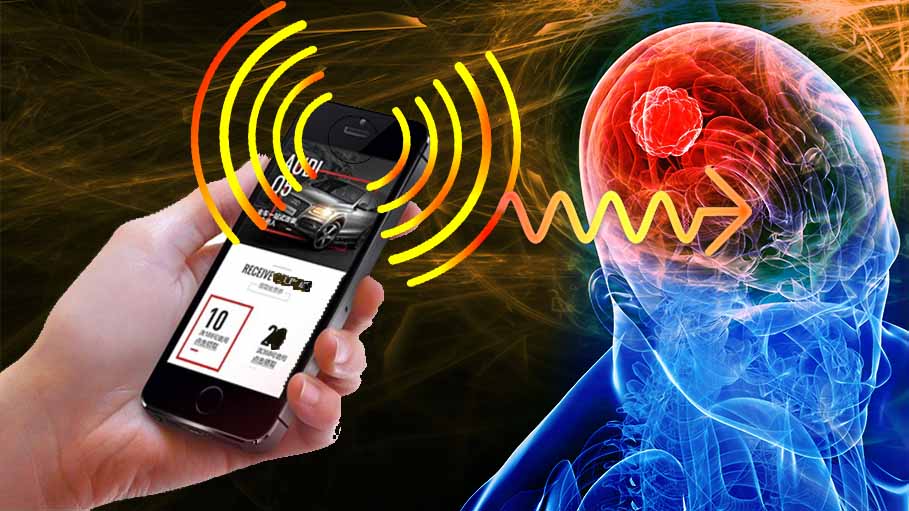
This toxin is called electromagnetic radiation. It is emitted from cell towers, cell phones, WI-FI routers, cordless phones, wireless utility meters, baby monitors, various wireless ‘Smart’ devices, and the electric grid. The adoption of wireless technology has mushroomed in recent years leading to widespread exposure. Most of us have assumed that such technologies are safe. We now know that this assumption is wrong. [14] With the telecom industry plans to roll out 5G on land and in space we face the possibility of total annihilation. [15]

All of life has an electrical component. We are bioelectrical beings. Our thinking and bodily functions are orchestrated through complex and sensitive bioelectrical signaling. With electrification and the proliferation of electronics, our bodies are failing as our biology begins to collapse under the ‘smog’ of artificial signals. We have created an inhospitable environment in a world that is increasingly out of balance with nature. We have lost connection with our inheritance and our role on this planet and we are reaping the consequences of our desecration of life. [2]

We will need to make an immediate and widespread break from these technologies if our species and many others are going to survive.

REFERENCES

[1] Thresholds for perceiving metallic taste at high magnetic field.
Cavin ID, Glover PM, Bowtell RW, Gowland PA., 2007
https://www.ncbi.nlm.nih.gov/pubmed/17969179

[2] For information on the bio-individual variations in sensory perceptiveness of electromagnetic fields based on genetic predispositions, and heightened sensitivity due to overexposure thresholds read THE INVISIBLE RAINBOW by Arthur Firstenberg, 2017
Highly recommended book. https://www.cellphonetaskforce.org/buy-the-invisible-rainbow/

[3] Addiction to cell phones: are there neurophysiological mechanisms involved?
https://www.smombiegate.org/addiction-to-cell-phones-are-there-neurophysiological-mechanisms-involved/

Internet and Gaming Addiction: A Systematic Literature Review of Neuroimaging Studies
Daria J. Kuss and Mark D. Griffiths, 2012
https://www.mdpi.com/2076-3425/2/3/347/htm

It’s ‘digital heroin’: How screens turn kids into psychotic junkies
By Dr. Nicholas Kardaras, 2016
https://nypost.com/2016/08/27/its-digital-heroin-how-screens-turn-kids-into-psychotic-junkies/
“I have found it easier to treat heroin and crystal meth addicts than lost-in-the-matrix video gamers or Facebook-dependent social media addicts.”

[4] Adverse Health Effects from the Operation of Digital Broadcast Television Stations (DVB‐T)
By Dr. Cornelia Waldmann-Selsam, Dr. Christine Aschermann, and Dr. Markus Kern, 2009
https://www.globalresearch.ca/adverse-health-effects-from-the-operation-of-digital-broadcast-television-stations-dvb-8208-t/12596

What is digital dementia?
Devra Davis, PhD, Environmental Health Trust, 2013
https://vimeo.com/71749330

Morality is modified in the lab
BBC News, 2010
http://news.bbc.co.uk/2/hi/health/8593748.stm

Father who blames school’s wi-fi for 12-year-old daughter’s list of 40 symptoms including rashes and itchy skin as he takes her out of lessons to educate her at home
By Bryony Jewell, 2019
https://www.dailymail.co.uk/news/article-6760807/Father-blames-schools-wi-fi-12-year-old-daughters-40-symptoms-including-rashes.html

Empathy: College students don’t have as much as they used to
University of Michigan, 2010
https://news.umich.edu/empathy-college-students-don-t-have-as-much-as-they-used-to/

[5] Review Microwave frequency electromagnetic fields (EMFs) produce widespread neuropsychiatric effects including depression
Martin L. Pall, Professor Emeritus of Biochemistry and Basic Medical Sciences, Washington State University, 2015
https://reader.elsevier.com/reader/sd/pii/S0891061815000599?token=C1DD7667943E6361E727DAD493D2966E957AC847C15A1B696657642EEF049EAD03F8903BEF8382825B02AB7DF4FD573F

[6] 5G: Great risk for EU, U.S. and International Health! Compelling Evidence for Eight Distinct Types of Great Harm Caused by Electromagnetic Field (EMF) Exposures and the Mechanism that Causes Them
Martin L. Pall, PhD, 2018
https://peaceinspace.blogs.com/files/5g-emf-hazards–dr-martin-l.-pall–eu-emf2018-6-11us3.pdf

[7] Temporal trends in sperm count: a systematic review and meta-regression analysis
Levine H, Jorgensen N, Martino – Andrade A, Mendiola J, Weksler – Derri D, Mindlis I, Pinotti R, Swan SH, 2017.
Human Reproduction Update
https://academic.oup.com/humupd/article/23/6/646/4035689

[8] Fertility rate, total (births per woman)
World Bank Group, 2017
https://data.worldbank.org/indicator/sp.dyn.tfrt.in

[9] The infertility crisis is beyond doubt. Now scientists must find the cause
The Guardian, July 2017
https://www.theguardian.com/science/2017/jul/29/infertility-crisis-sperm-counts-halved

Male Infertility Crisis in U.S. Has Experts Baffled
By Bryan Walsh, 2017
https://www.newsweek.com/2017/09/22/male-infertility-crisis-experts-663074.html

World Fertility Patterns 2015, United Nations Report
https://www.un.org/en/development/desa/population/publications/pdf/fertility/world-fertility-patterns-2015.pdf

Global Infertility Treatment Market Will Reach USD 2,567 Million By 2025: Zion Market Research
https://www.globenewswire.com/news-release/2019/03/01/1745270/0/en/Global-Infertility-Treatment-Market-Will-Reach-USD-2-567-Million-By-2025-Zion-Market-Research.html
“According to the report, the global infertility treatment market was valued at approximately USD 1,519 million in 2018 and is projected to generate around USD 2,567 million by 2025, at a CAGR of around 7.8% between 2019 and 2025.”

[10] RF radiation-induced changes in the prenatal development of mice.
Magras IN, Xenos TD., Bioelectromagnetics 18:455-461., 1997
https://www.ncbi.nlm.nih.gov/pubmed/9261543

[11] Swedish review strengthens grounds for concluding that radiation from cellular and cordless phones is a probable human carcinogen.
Davis DL1, Kesari S, Soskolne CL, Miller AB, Stein Y., 2013
https://www.ncbi.nlm.nih.gov/pubmed/23664410

[12] 5G – Kevin Mottus
https://www.youtube.com/watch?v=Me1YfVZgHlA
“The other thing, with cigarette smoke on average it takes about 30 years for tumor growth. What the studies are showing with cell phones and brain tumors is it takes about 10 years. So you’re talking about an agent three times as carcinogenic as cigarette smoke and we are exposing people to it very efficiently and effectively.”

[13] Bees, Birds, and Mankind: Destroying Nature by ‘Electro smog’
Ulrich Warke, 2007
https://www.naturalscience.org/publications/brochure-bees-birds-mankind-destroying-nature-electrosmog/

Alfonso Balmori
https://www.cellphonetaskforce.org/other-articles-by-alfonso-balmori/

More than 75 percent decline over 27 years in total flying insect biomass in protected areas
Caspar A. Hallmann, Martin Sorg, Eelke Jongejans, Henk Siepel, Nick Hofland, Heinz Schwan, Werner Stenmans, Andreas Müller, Hubert Sumser, Thomas Hörren, Dave Goulson, Hans de Kroon, 2017
https://journals.plos.org/plosone/article?id=10.1371/journal.pone.0185809

[14] BioInitiative Report, Updated 2017
https://bioinitiative.org/

[15] INTERNATIONAL APPEAL: Stop 5G on Earth and in Space
https://www.5gspaceappeal.org/the-appeal
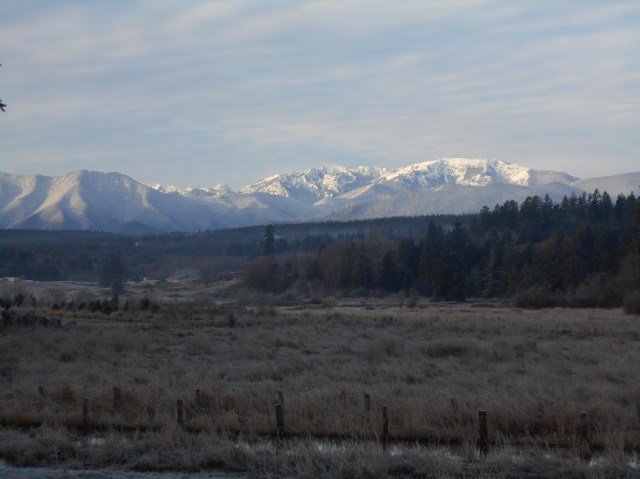

Farewell to the Northwest

View outside my door of the Olympic Mountains.

When I moved to the Olympic Peninsula a few years ago it seemed like a good place to hole up and ride out the collapse of civilization. Plenty of water, lots of forest, near the ocean, nice folks (for the most part), a thriving maritime culture and a place that might be relatively stable with climate change coming.

This Spring I changed my mind.

I decided to leave the Olympic Peninsula for 2 reasons.

REASON 1 – THE MILITARY

There is a lot of military presence around the Puget Sound.

Naval Base Kitsap

This base merged Naval Station Bremerton which hosts a fleet of decommissioned war ships, including aircraft carriers with the Naval Submarine Base Bangor. Naval Base Kitsap houses the Trident Submarine Base, as part of the Strategic Weapons Facility Pacific (SWFPAC) which provides maintenance, calibration, missile assembly/test, spare parts, and spare nuclear warhead storage for the Trident II ballistic missiles that are carried by the nuclear submarines. This is one of two nuclear submarine bases in the US and the only one on the west coast. This is rumored to be the largest nuclear stockpile on the west coast.

Naval Base Kitsap is the largest naval organization in Navy Region Northwest and the third-largest Navy base in the U.S. It features one of the U.S. Navy’s four nuclear shipyards, one of two strategic nuclear weapons facilities, the only West Coast dry dock capable of handling a Nimitz-class aircraft carrier and the Navy’s largest fuel depot.

Naval Air Station Whidby Island

This base serves as the primary center for air force training and operations in the region. It is known for it’s constant noise disturbance from the Growlers and other aircraft flying overhead.

This base is conducting the controversial Electromagnetic Warfare Training on the Olympic Peninsula.

Being a student of history, I am aware that social upheaval can lead to martial law under military rule. I am also aware that should foreign policy fail, this area might get caught in a crossfire.

It seems prudent to find neighbors that I might actually want to live among.

aircraft carrier

REASON 2 – LOW FOOD RESILIENCY

There is a serious lack of food security in the region.

While there are many worse places in the country to be it has been estimated that local food consumption is around 5%, at most. While plenty of lip service is given to “buying local,” very few people are actually committed to living within the county’s food shed. People prefer to buy commodity foods from the far reaches of the planet. This shortsightedness will guarantee that local farmers will not get the support they need to be viable.

Until farmers can expect to make a good living and have a high quality of life for the essential services that they provide, very few will venture into the sector. If very few people take up farming, then we will have a very tough time when an abrupt economic/energy crisis hits. I expect that local farmers will continue to financially struggle until a national or regional crisis strikes. Then people will be forced to localize the food supply. When this happens many will go hungry but people will start to engage in food production. Here’s the problem: there’s a significant learning curve to farming and productive food systems take years to establish.

In the winter of 2017/2018 I did a white paper on regional food security for Jefferson County, Washington. I wrote:

“East Jefferson County has a population of approximately 30,000 residents. According to the county comprehensive plan document on housing, PC Agenda 11-01-2017.pdf: “since… 2004 and continuing for the current 20 year planning period, population growth is expected to occur at a very modest rate (~1% annually).” This leaves us with a population increase of about 1,000 people every 3 years. If we see an influx of migration [from climate refugees], this will increase further. East Jefferson County has 6,423 acres zoned as agricultural land (Jefferson County Central Services, GIS). While food can be grown on other types of zoned land, this figure is being used to generate a rough estimate of our productive limits. This gives the current population in East Jefferson County .21 acres per person (about 1/5 of an acre) on which to feed ourselves. We have about 30,000 people now, the county thinks we will be approaching a population around 40,000 in twenty years. Say it takes two acres of agricultural land to feed each person without exhausting the farm land. This means that we will require around 80,000 acres in food production to be self-sufficient. We only have 6,423 acres available right now. We would need over twelve-times as much farm land than is currently available to be anywhere close to establishing food security in Jefferson County […] Our population is currently far beyond what the land can support. We are maintaining our current population through the dependency on exploitation of resources from other lands. When these imports become scarce, we will have to face the reality of finite carrying capacity. We can supplement some food from the ocean, but the health of the fish populations is in decline, making the ocean an uncertain food source in the future. While I don’t expect outside trade to vanish completely (especially for the affluent), my purpose is to illustrate how far we have grown beyond our regional biological limits already. The addition of new people to the region further stresses our potential for local resiliency.”

Food Security White Paper
Thoughts on developing a sustainable economy in Jefferson County, Considerations for the 20-Year Plan, 2018

I expect that people will probably deforest and damage ecosystems in their attempts to acquire sufficient land for food production.

I am leaving the United States for 2 reasons.

Two big shifts for me occurred earlier this year. One was realizing how electromagnetic radiation (EMR) and the push toward 5G is destroying us and all of life. I detail this in my post Imagine a Toxin. It was reading 5G: Great risk for EU, U.S. and International Health! by Dr. Martin Pall and Shrinking the Technosphere by Dmitry Orlov that helped me conclude that the odds of survival within an advanced technological society are slim. I decided I needed to find a low-tech (i.e. non affluent) country where food production is still practiced by a large portion of the population. It became clear that even if I moved to one of the few remaining small farm organic agricultural areas in the United States, the harm from wireless technologies would still get me. Even if I don’t own any gadgets myself these devices are transmitting everywhere. It is time to return to a pre-industrial and ecological life way.

REASON 1 – THE EMERGING HEALTH CRISIS

You can search online for all kinds of articles about declining life expectancy, mental health problems becoming epidemic, chronic disease rates consuming the population and so on. I used to think that what happened in Cuba during the Special Period would be a microcosm of what we could expect on a global scale with the coming collapse of civilization.

Then I realized that there is a significant difference between that situation and the one that we are in. Cuba had a collapse with a relatively sane and healthy population. If you look at the biological breakdown of our species from poor nutrition, chemical pollutants, GMO’s, vaccine injury, sedentary lifestyles and electromagnetic radiation (EMR) and then look where these trends are going…. All sorts of crisis are coalescing: the decline in freshwater availability, the end of cheap energy, biodiversity (species) loss, soil degradation, climate change. On top of all of this, humans, the species that is responsible for this mess are failing physically and mentally.

Surviving a collapse among people with their physical and mental health intact is a very different thing than a collapse among people that are suffering from a spectrum of neuropsychiatric disorders due to EMR exposure. You may be able to count on a sane neighbor to be somewhat reliable. Stability allows for opportunities to work together for mutual benefit. A mentally damaged person may not be predictable, lack empathy, not be functional enough to collaborate with, and may indeed be quite dangerous. Will you be able to trust your neighbor who is cracking under the stress?

The scenario that we are facing brings to life the Zombie Apocalypse metaphor quite vividly. It may be more appropriate to call it the EMR Apocalypse. You may think I am being hyperbolic but I am quite sincere. When we consider what we are losing it becomes quite clear that technology is destroying the Earth.

Since humanity seems quite committed to collective suicide, I’m going to try to avoid becoming another health statistic and escape.

REASON 2 – THE EMERGING POLICE STATE

A surveillance society is under construction as 5G/the Internet of Things (IoT) is rolled out with the goal of total social control.

San Diego is well on it’s way to a Chinese-style prison city. Tech giants like Facebook and Google are trafficking in surveillance capitalism. Google censors on behalf of corporate interests. Amazon censors on behalf of pharmaceutical interests. Facebook censors on behalf of political interests. Mailchimp also joins the assault on freedom of speech.

We live in an Orwellian world where truth is criminalized. Information that challenges corporate interest is suppressed under the pretext that such information “misinforms and endangers the public and therefore needs to be censured.” Industry lies are accepted as the official TRUTH. There is no shortage of evidence that corporations have hijacked regulatory bodies within the government, yet the charade continues.

The developments in robotics and Artificial Intelligence are an increasing threat to freedom and humanity.

Former National Security Agency whistle blowers like William Binney and Edward Snowden have been warning us for years about the growing police state. Despite the warnings, what remains of our limited freedoms continues to evaporate with little opposition. The internet has become the foundational infrastructure to our prison society. Peoples response? Continue to buy the products and services that move us closer to totalitarianism.

China, Europe and the United States all seem to be dead set in a race toward technological dystopia. This will be a race to the bottom with the destruction of people and planet as the only outcome.

I’d rather not be in the epicenter of this insanity. Any city, any technologically advanced society, and anywhere that capitalism has poisoned the minds of people to the degree that they actively undermine the environment and future generations for short term gain is unsafe. The sickness is everywhere.

I realize that this doesn’t leave many options for safe places to be.

Even so, I aim to find a place where life and freedom can flourish.

Provisioning the Journey

My original plan was to sail down the west coast of the United States from Washington to Guatemala, take some Spanish lessons, then continue on to South America. I had a boat and captain lined up for the journey but the plan fell through. I had already started setting aside provisions to feed a crew of four people for over a month. I decided on a few nutrient dense foods that were available to me. I needed sustenance that would travel well and that I would enjoy (or at least eat). These foods in addition to what each other crew member brought and what we could find along the way was intended to keep us fed. I harvested and prepared all of the following except the salt.

THE HIERARCHY OF FOOD PRESERVATION

CHOOSING THE METHOD

1) Eating food fresh, harvesting it as you need it or fermenting food is optimal for health. The process of fermentation actually increases the nutritional value and bio-availability.

2) Second to this option is dehydrating foods. This is an excellent choice for travel as long as you drink plenty of water. Dehydrated foods are light weight and pack well. Dehydrating using low temperatures will retain most of the nutrition.

3) I won’t be using much refrigeration or freezing on the trip, both of which deplete food enzymes and vitality. Freezers/refrigerators emit strong electromagnetic fields, especially when the compressor comes on. Freezers/refrigerators are not very portable and are very energy intensive. There are various forms of traditional food storage that offer options for keeping food preserved. There are also strategies like having your meat stored on the hoof (meaning the animal stays alive until you are ready to eat it). This allows you to eat fresh meat without needing to store it in a freezer. Certain crops can be left in the ground or buried in mulch (insulated) until ready. From a nutritional perspective some traditional food storage methods might rank alongside dehydration, after fermentation. Most of these techniques are better for stationary living and are less useful for traveling.

4) Salting (meat) can be used, but not in excess.

5) Smoking meat can be a good option when drying is difficult due to the climate (salmon in the Pacific Northwest). Care should be taken to avoid carcinogenic methods of smoking. If smoking is used to preserve food, cold smoking is the preferred method because it retains the nutritional value well.

6) I stopped canning food because the process of canning results in significant nutrient loss, is energy intensive, and there is also the rare case of botulism. Plus, the jars are heavy and can get expensive in quantity.

7) It is prudent to relearn traditional food preservation now, so we are not unprepared when the lights go out. Chelsea Green carries my favorite book on the topic: Preserving Food Without Freezing or Canning: Traditional Techniques Using Salt, Oil, Sugar, Alcohol, Vinegar, Drying, Cold Storage, and Lactic Fermentation by the Gardeners & Farmers of Terre Vivant.

FAT

If I was only going to take one food item into the wilderness it would be fat. This food offers the most value by weight. Loaded with fat soluble nutrients and by far the best source of energy for the body, fat deserves the central place in any food provisioning.

I prepared two types of fat: ghee and tallow.

TALLOW PRODUCTION

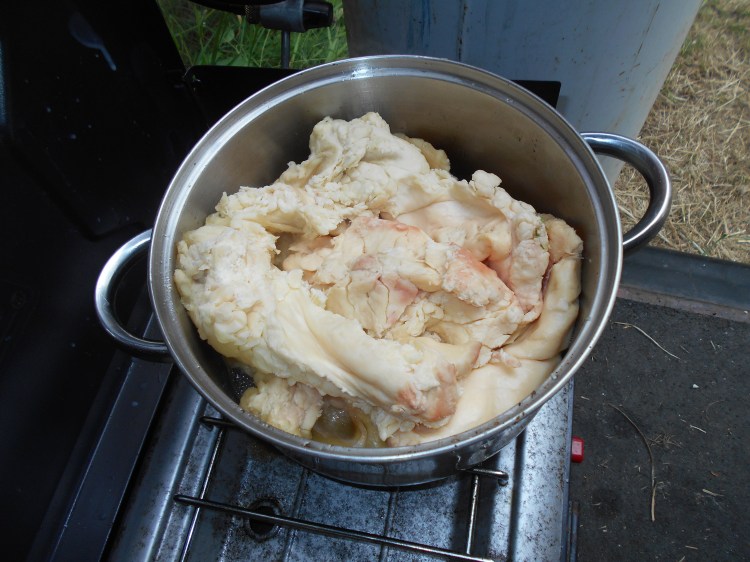
This is fat that was taken from Hank during slaughter.

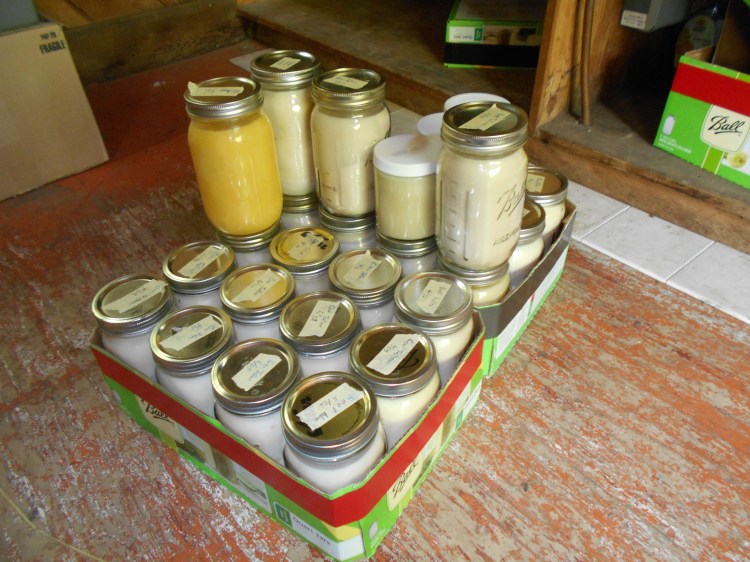
The fat was heated on a low temperature with regular checking to make sure that the fat was not sticking to the pot and burning. The fat will mostly liquefy except for part of the membrane which will shrivel up and can be separated. I used a stainless steel strainer with a milk filter to filter out the particles as I poured the liquid fat into jars. You could also use fabric to filter or just the stainless strainer. Be sure to let the oil cool a little before pouring the hot liquid into jars. You don’t want to have the glass break from excess heat.

Ghee (bright yellow jar) and tallow from sheep and cow. That there is a pile of pure ‘gold.’

GHEE PRODUCTION

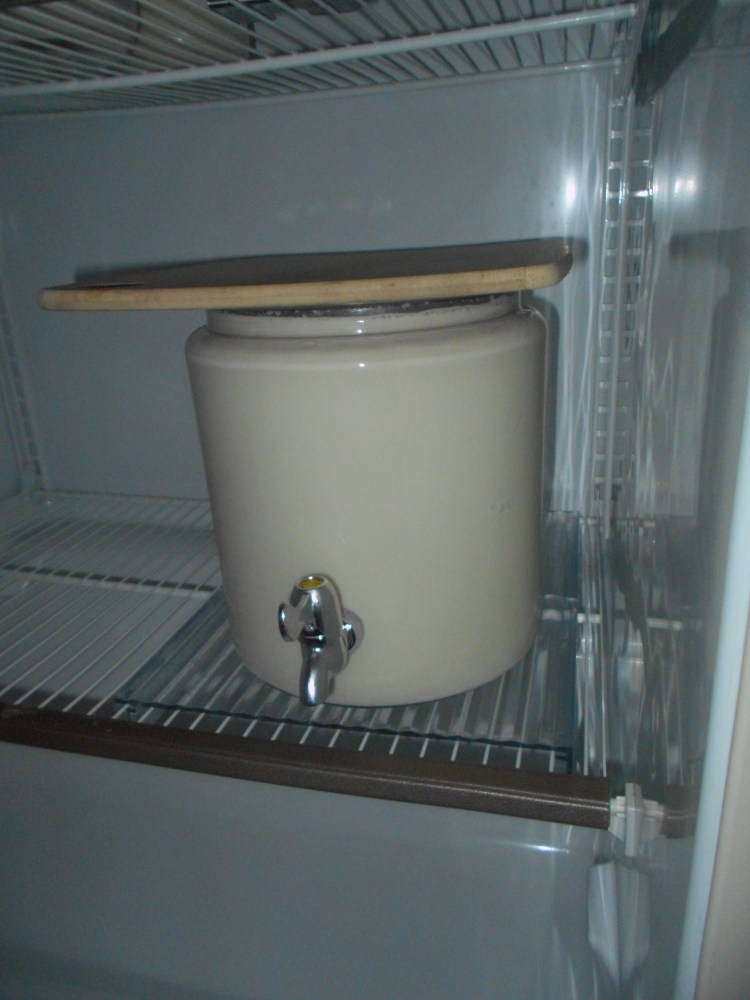
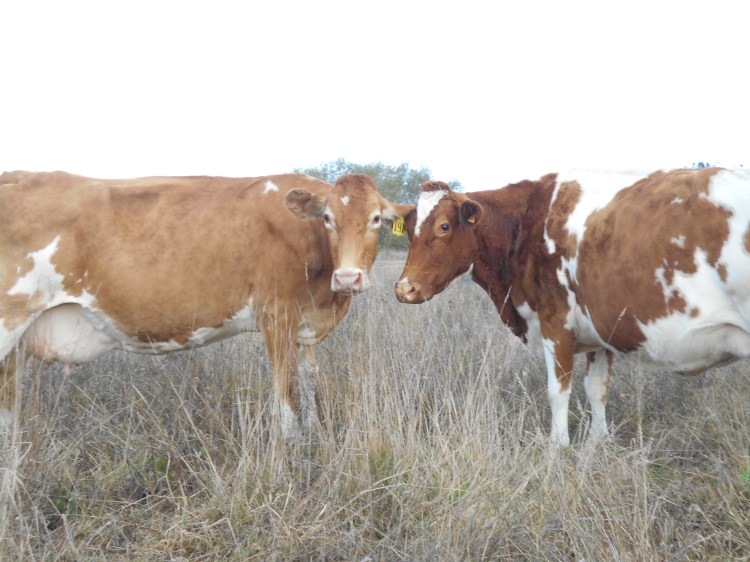
I placed milk from my dairy cows in this glass container in the refrigerator. The cream would rise to the top after a day. I would then drain off the skim milk (below the cream line) with the spout and add fresh milk each morning. I would continue this process for many days until the 2.5 gallon container was mostly cream. Yum!

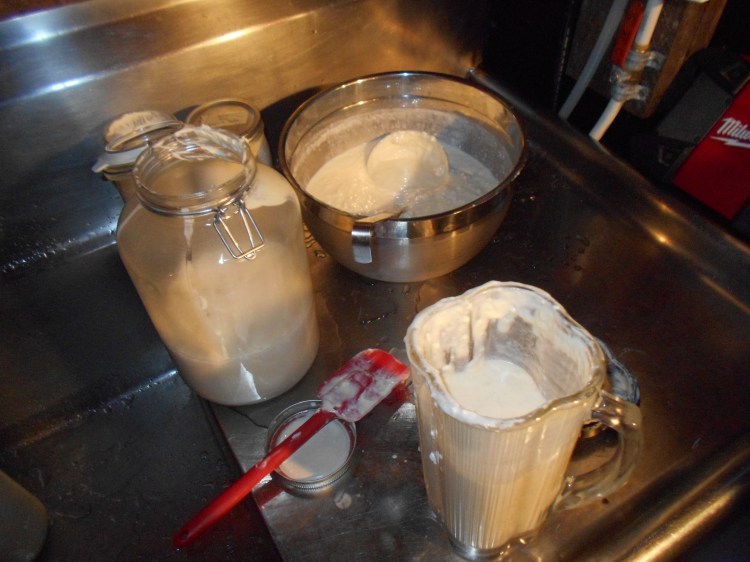
I had read online that you can use a blender to turn cream into butter. It did not work for me. My problem was that the blender was heating up the cream too much and the fat was not separating. So I had to use a combination of blending, re-refrigerating and then shaking the cream in a jar to get the butter. I wish I had a real butter churn. After this I followed an online recipe for making ghee.

Making ghee and butter took a lot of work and yielded little. I do not think it is worth the trouble. I would prefer to make tallow for a cooking oil (instead of using butter/ghee) and I would rather make cheese (instead of butter/ghee) as a way to preserve milk. I get higher yields with cheese for less time and energy spent. Both ghee and hard cheeses have a long shelf life. Raw cheese retains the nutritional value but ghee is cooked, which reduces nutritional value.

NETTLES

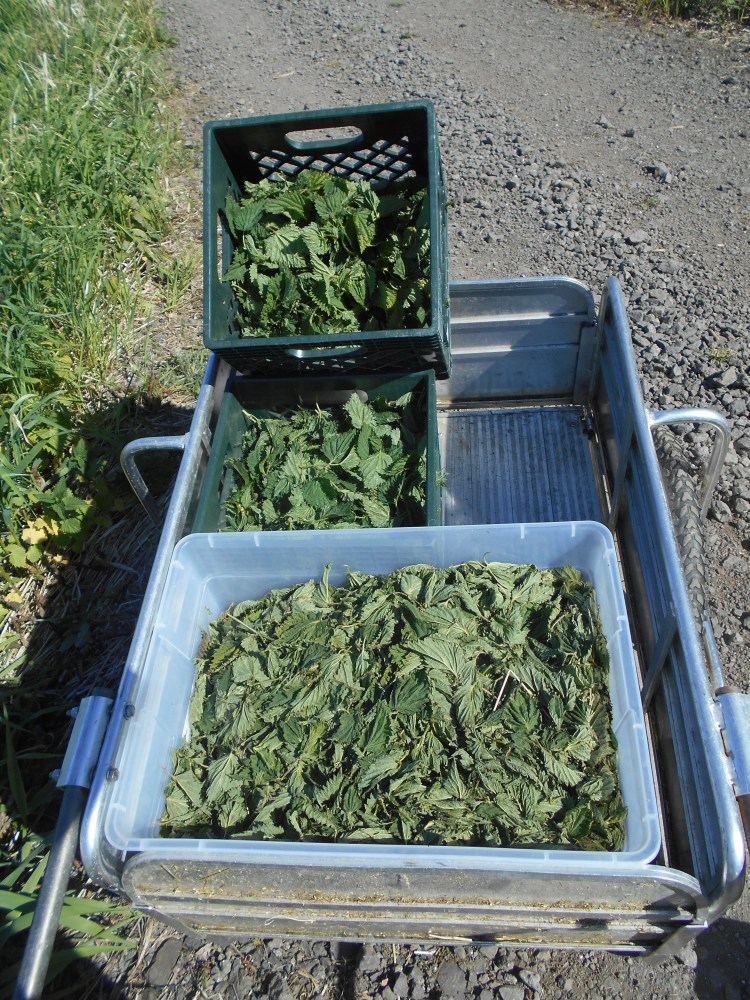
I harvested fresh nettles.

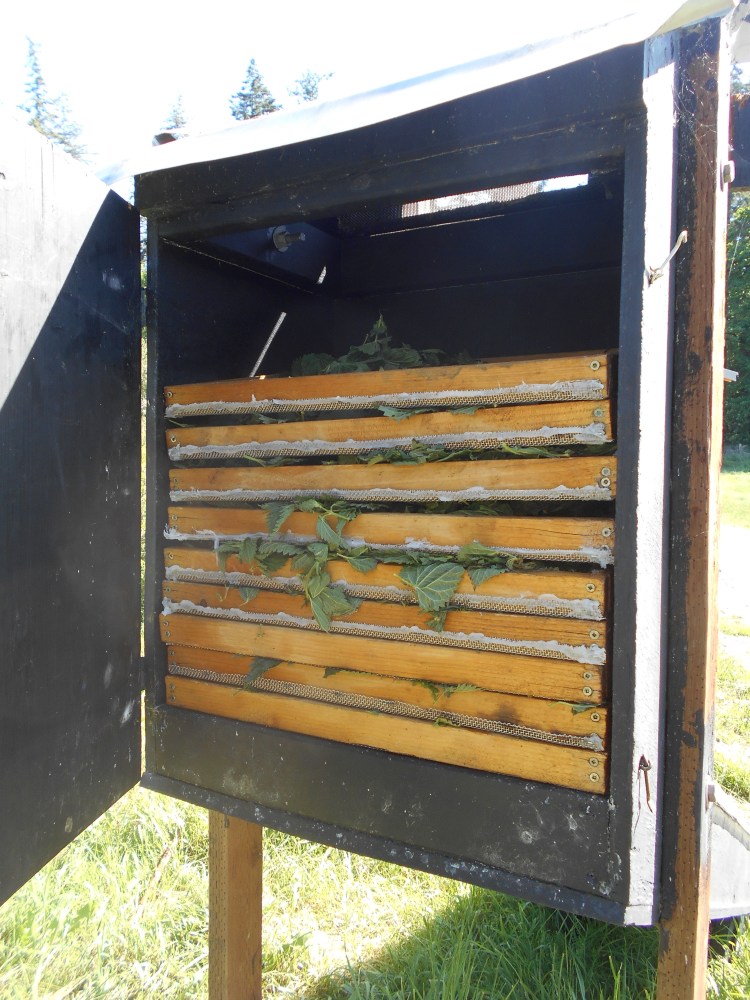
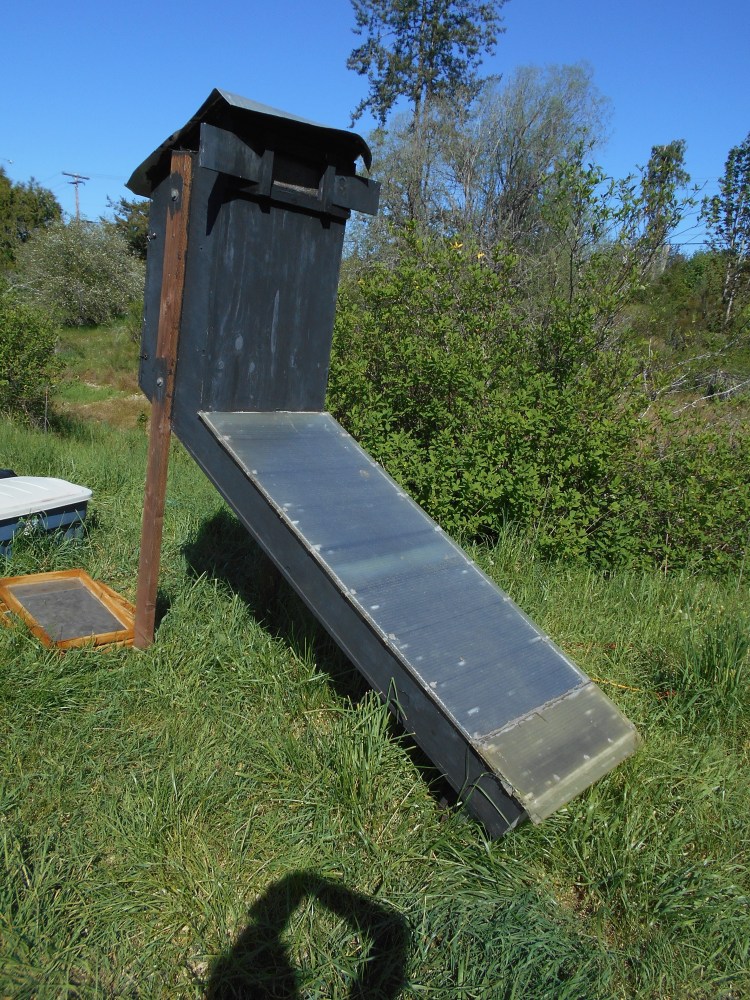
Then I used a solar dehydrator to dry the nettles.

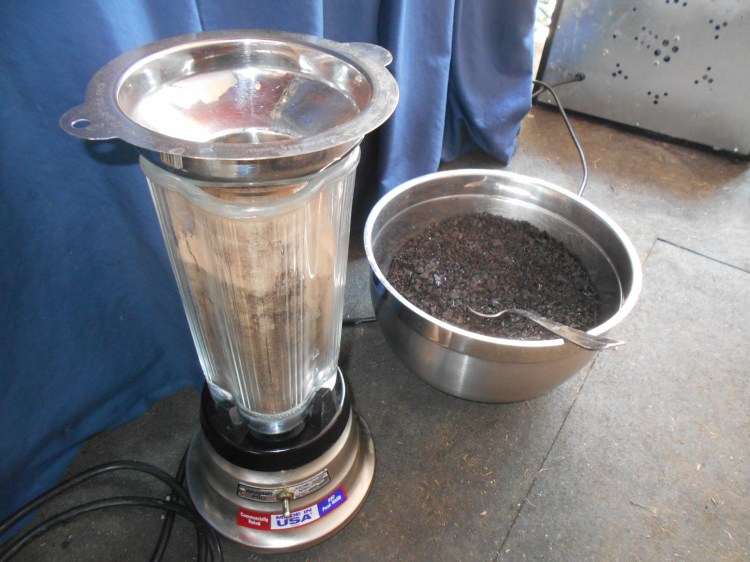
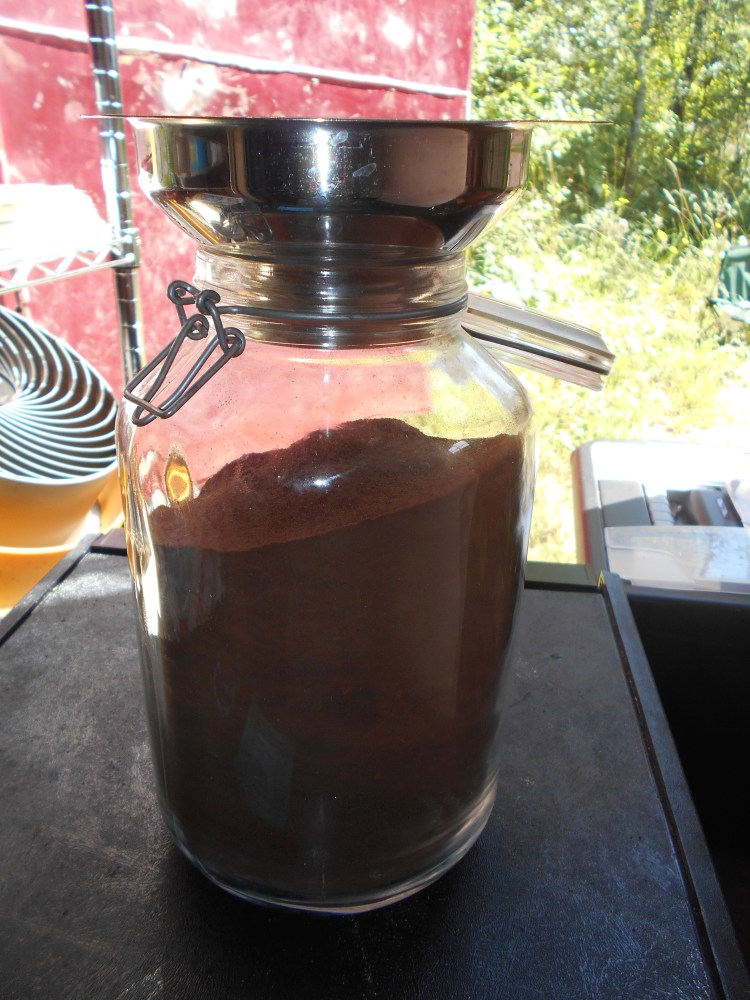
Dried nettles were placed into a blender and powdered. Powdered nettles can be mixed into meals, added to cheese, etc. They are high in minerals and other nutrients.

BEEF

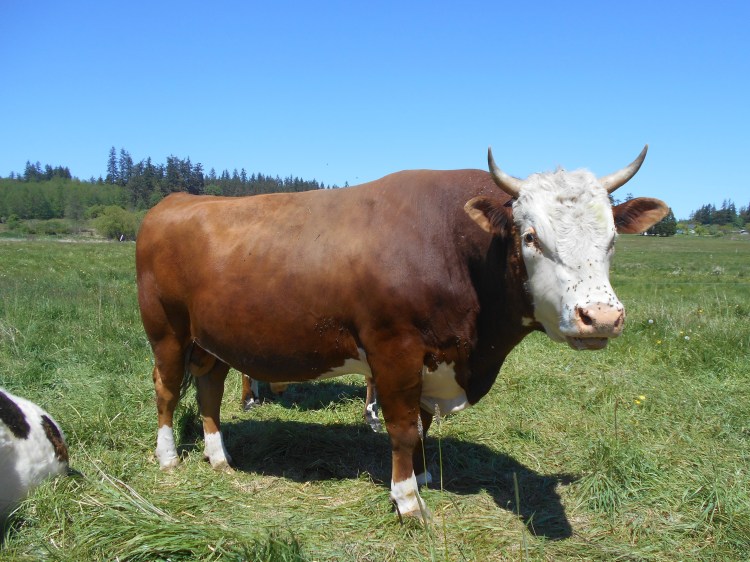
My bull Hank

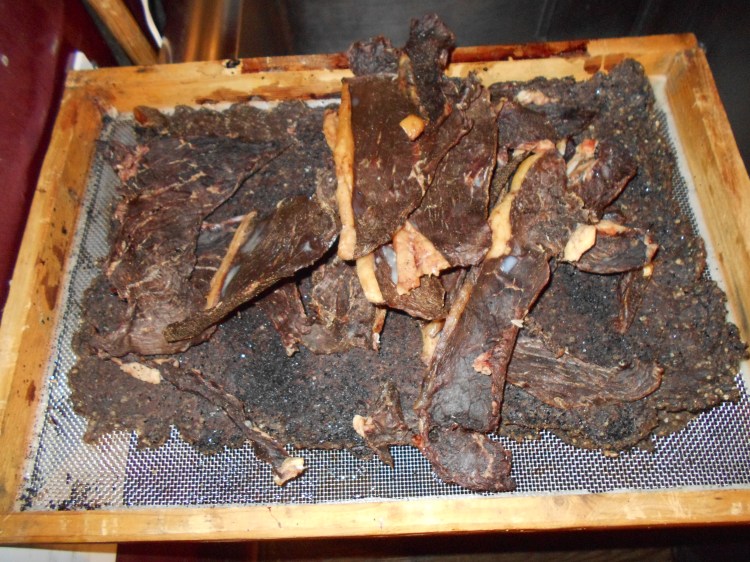
Hank was put in the solar dehydrator too.

The butcher had a machine that would cut the beef into strips for making jerky. I just sprinkled on some salt. At the bottom of the pile in the photo is ground beef pressed into a sheet with salt, powdered nettles, powdered blood, and dehydrated cheese chunks. My ‘beef roll-up’ ration.

BLOOD

The blood carries nutrients throughout the body. The Massai in Africa live off of blood-milk. This stuff is nutrient dense!

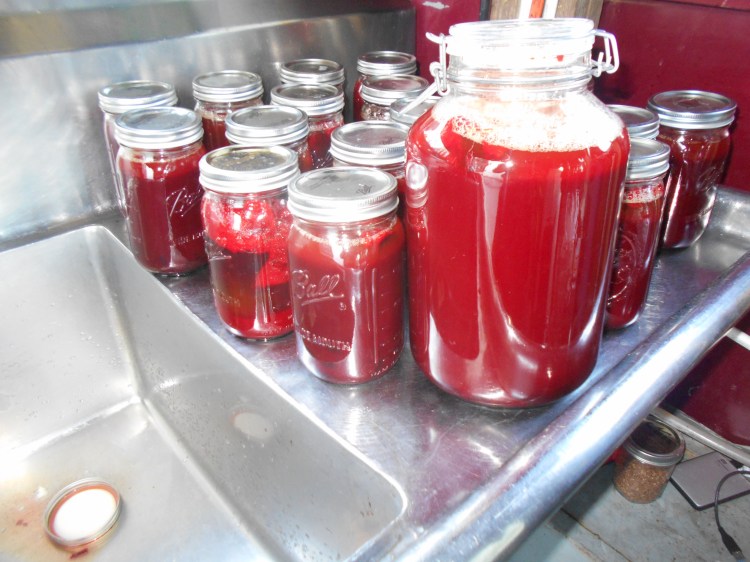
Over six gallons of blood was collected from Hank during slaughter.

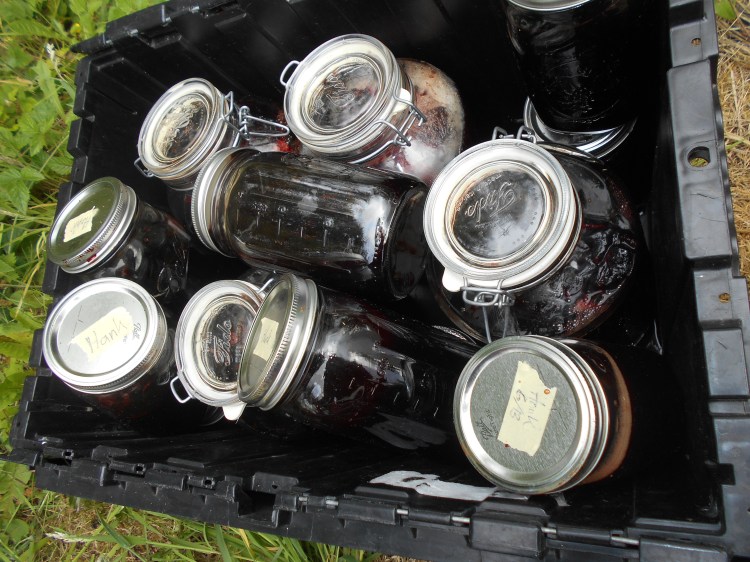
The blood coagulated during the slaughter in buckets. It was later jarred up and frozen until I had a stretch of sunny weather to solar dehydrate the blood.

Frozen jars of blood thawing

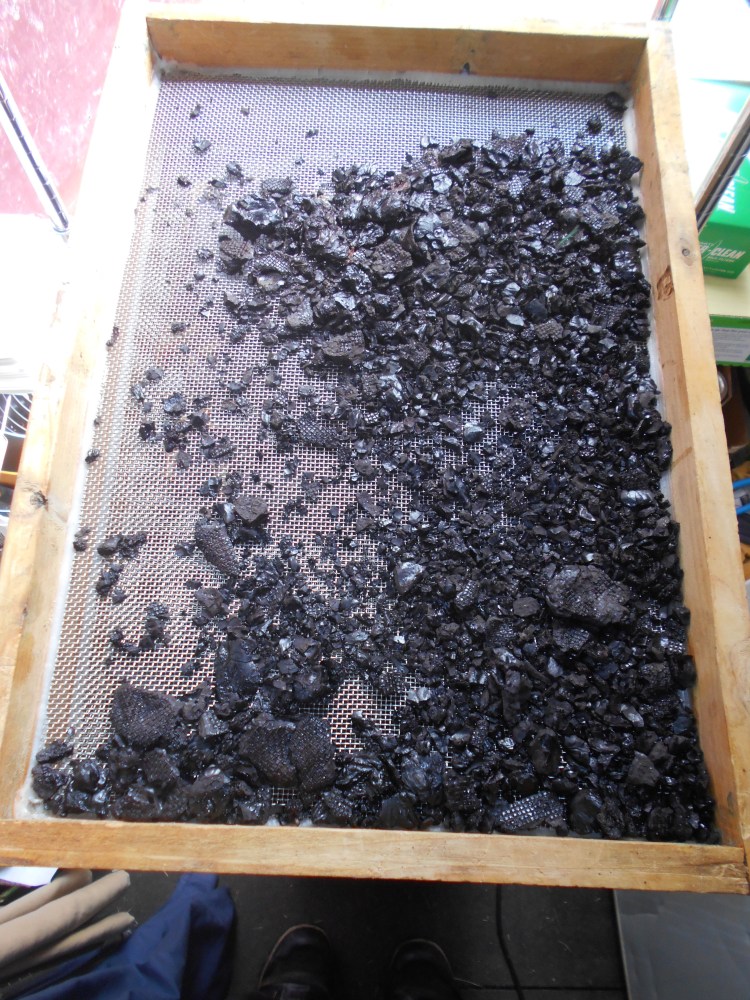
I took the thawed (previously frozen) blood and strained it through the stainless dehydrating screens (from the solar dehydrator) over a large bowl. The coagulated blood (about half) was left on the screen. I spread it out on the screen and put it in the dehydrator to dry. The remaining liquid in the bowl was refrozen, to be made into blood-milk later.

Dried blood on screen.

Blood crumbles were placed into a blender to be powdered.

Powdered blood put into jars.

Now, get down with your inner vampire… dried blood easily mixes into meals and drinks.

Unfortunately I’ve had some inflammation lately. Apparently excess iron can lead to inflammation. Males are more prone to iron toxicity because females have higher iron needs. So I passed on my powdered blood to a friend who understands the value of such foods.

SAUERKRAUT

I had also planned on making several gallons of sauerkraut. But it is heavy to carry. So without the boat, I will go without the kraut.

FAILED EXPERIMENTS

CHEESE BALLS

Milking cows

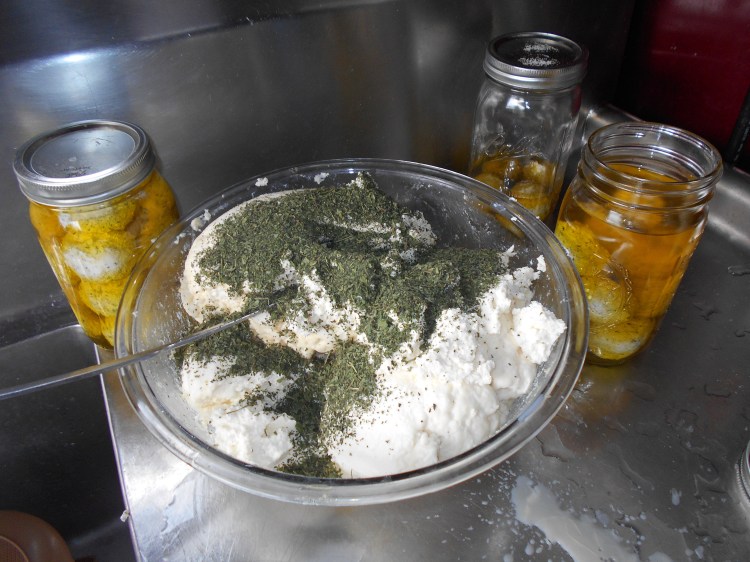
These are cheese balls with powdered nettles that are supposed to stay preserved in olive oil up to 8 months. Despite following the recipe, the cheese was too moist and fermented in the jars. The ambient temperatures of the spring/summer were too high to prevent fermentation. So I strained the oil from the 36 quarts that I had accumulated and dehydrated the cheese instead. I used the recipe in the book The Art of Natural Cheesemaking by David Asher. Perhaps a different kind of milk or a different time of year would have resulted in success. I needed a recipe that would keep as I sailed through the tropics. I did not have the equipment or time to make hard cheese before the trip.

PICKLED EGGS

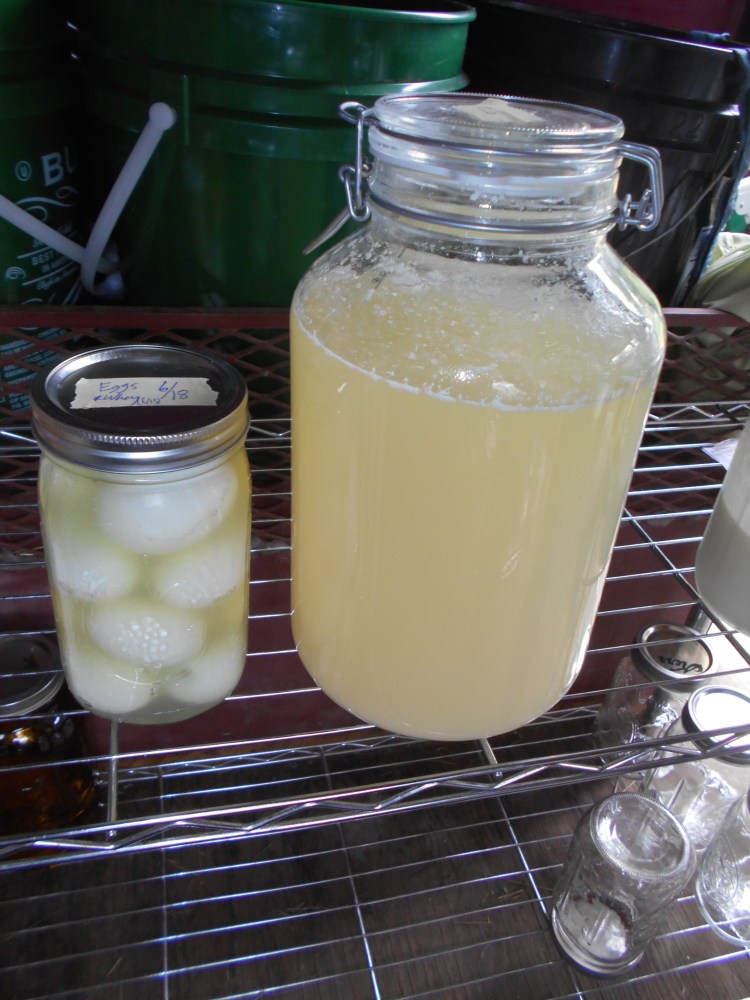
Hard boiled eggs in whey

Whey has been used as a fermentation starter to preserve foods. I thought that I would try to make pickled eggs using whey instead of vinegar. It did not taste good, it’s better to stick with vinegar.

FINAL PROVISION HAUL

In the end I did not travel by boat and ended up taking the bus. For the first month or so I traveled with a duffel bag containing a few jars of fat and about 40#’s of jerky. Some people might just choose to buy food in the store or at restaurants. Not me. I’ll haul my provisions around. You can’t trust food in the store these days, even if labeled “organic.” Mama always taught me to avoid eating things from strangers. Here’s a motto to live by: If you don’t know where it was grown, don’t stick it in your mouth.

Travel Hack #1 – Securing My Valuables

I knew that I would be visiting some impoverished areas and that I might be a target as a foreigner. Though I try to avoid big cities and do not generally travel at night in certain countries, things can sometimes not go as planned. In the instances where I might be targeted for assault or robbery, here are some of the things that I do to minimize losses.

Securing el Cuerpo

[el kwer-po] (the body)

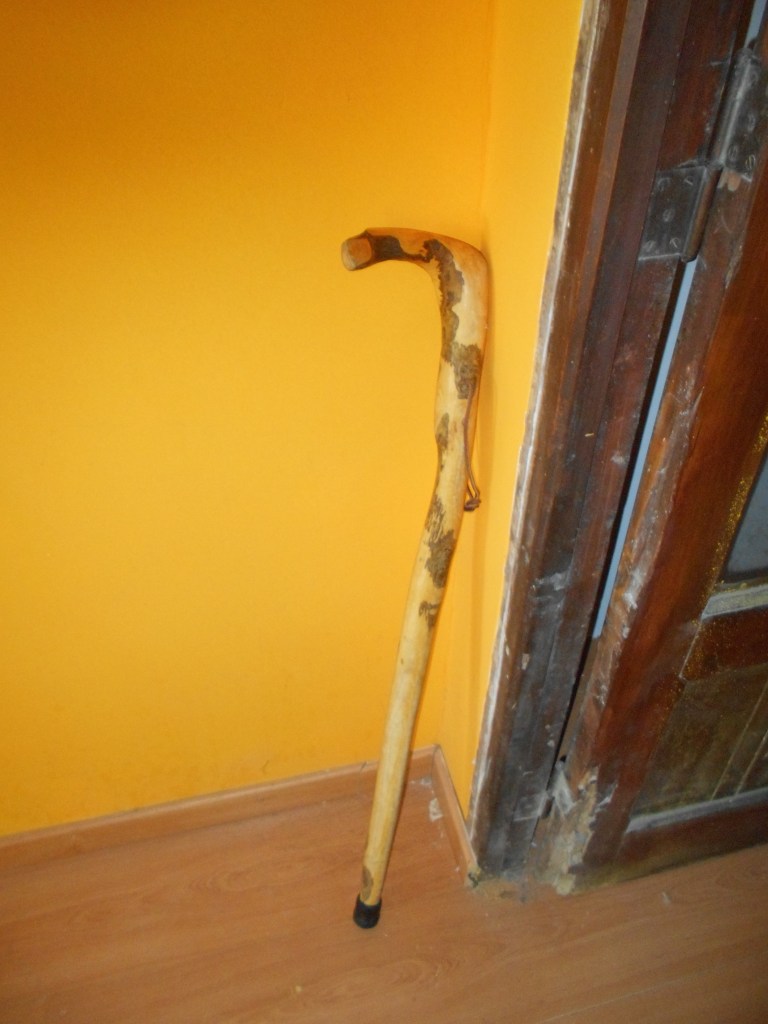
Officially this is my hiking stick. (I am going for the backpacker archetype.)

What it really is: a hefty meter-long club with a nice hook at the end intended to deter social predators.

You can’t take a baseball bat into carry-on luggage on a plane but you can take one of these. Walking sticks are an aid to the disabled and elderly. They do not even count as luggage, so they’re a freebie.

I also carry pepper-spray and a general purpose fixed blade knife for additional self-protection. These items go with the check-in luggage. Despite many border crossings, police check points and X-Ray machines, I have not had any questions or complications with any of these self-defense weapons yet.

I had considered also bringing a taser and a hand axe but I figured that this would be pushing the limits too much, increasing the chances of something getting confiscated.

Securing el Dinero

[el din-air-oh] (the money)

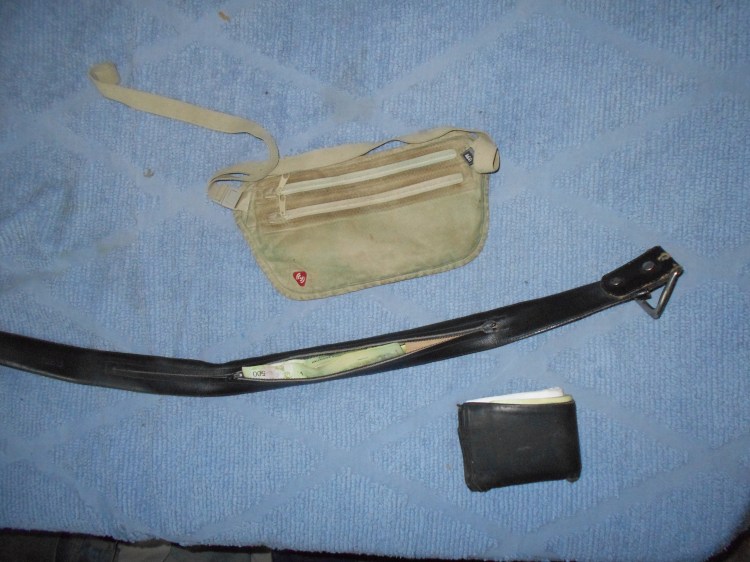
Strategy: Minimize financial losses by concealing, dispersing and decoy of dinero.

Tactic: Establish stash spots and utilize a “sacrifice” wallet as decoy.

The black belt in the middle has a pouch that closes with a zipper. I can fold and stack 20 bills in there. So if I am stashing $100 bills, I can put $2,000 in the belt.

The white pouch on top is where I keep most of the dinero that I can’t fit in the black belt. It is worn under clothing, around the waist or diagonally across the chest, over one shoulder.

I also usually stash a few bills in books, maps, or in my sock/shoe. For more ideas for stashing your money, see this link.

By dispersing dinero I increase the chances that I will not lose it all in the case of theft. For example, if my backpack containing dinero is stolen, I still have cash on me. If I am robbed and I left my backpack at a hostel, I will have dinero waiting for me in the backpack.

The wallet works like this: I carry a small amount of dinero in the wallet, about two days of expenditures. If the wallet is stolen or I am robbed and cannot get away, I can offer up the sacrifice wallet to try to avoid harm and a more intensive search.

Securing la Mochila

[la mo-chi-ya] (the backpack)

Backpack with Packsafe cable mesh.

This is a handy piece of kit from Pacsafe. It is a cable mesh that wraps around the mochila. At first I was not sure about adding another item to my already overweight pack (about 50#’s) but this security device has been great.

I have left my mochila wrapped in mesh with bus tickets sales offices so that I can walk around town without the added weight. It is great for sketchy hotels. One place I stayed at in Guatemala was shown to me by a “tour guide” who identified me as a tourist upon arrival at a boat dock. He told me he knew a cheap place to stay and brought me to a lot behind a gate off the main street. There were no signs, just word-of-mouth. Inside there was three simple rooms. The proprietor was around during the day but gone at night. I was able to wrap and lock my mochila around the bed frame when going out. Another example of when the Pacsafe came in handy is when I rode the “chicken” buses in Guatemala. On these buses the people get packed in and the luggage goes on top. Though I found the “chicken” bus operators to be helpful and honest, I felt better knowing that it would be difficult to quickly open up a pocket and take something when my mochila was out of my sight.

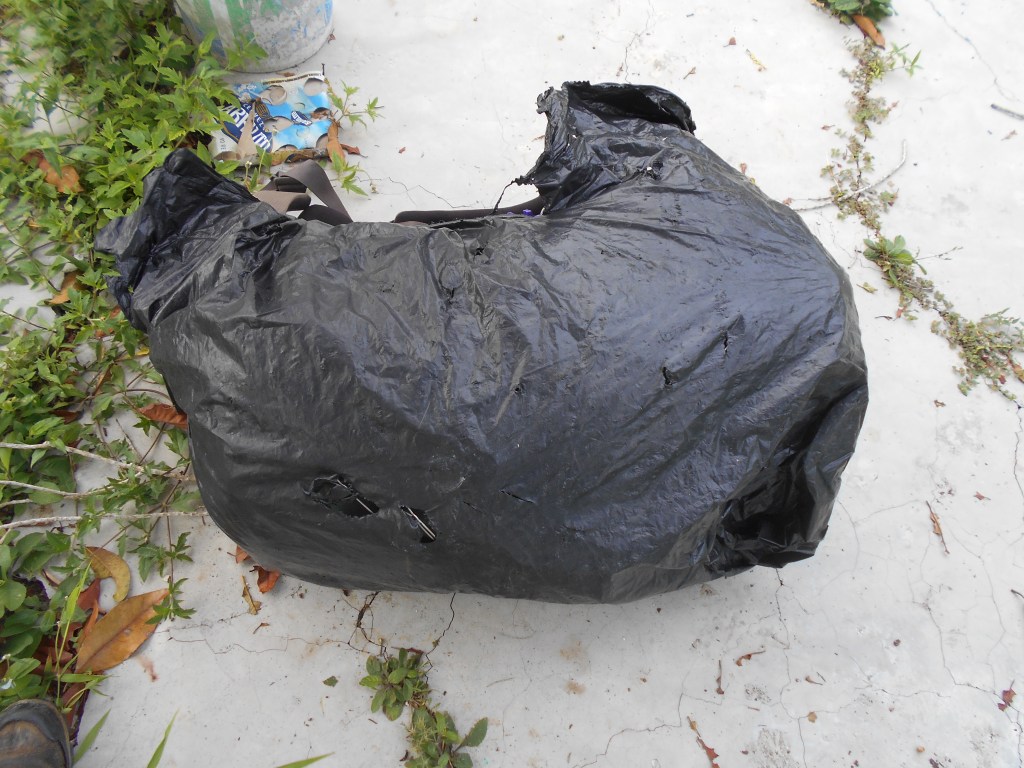
In Mesoamerica most people use plastic bags, cardboard boxes, baskets and other homemade forms of luggage. It is best to dress not only yourself down but also your mochila.

The plastic bag both protects the pack from some rain and hides the new/expensive mochila.

Other than this I just use common sense: do not flash money, jewelry, or electronics. Be aware. Trust my instincts.

Travel Hack #2 Radiation Reduction

These days travel exposes us to extremely high levels of radio frequency radiation. This type of radiation is emitted from cell phones, WiFi, cordless phones, digital radio frequency utility meters, “Smart” gadgets and more. Exposure to this harmful radiation is the primary reason why I no longer enjoy traveling. In the countryside, I can take measures to reduce my exposures significantly. When traveling there are many situations beyond my control.

The first step to take to reduce radiation exposures is to choose not to use cell phones or WiFi. Old-school phones with wired connections and a wired internet connection is much safer than wireless technology.

Cities and public transit are among the worst situations in terms of radiation exposures.

Cities are full of various wireless devices, electrical wiring, and electronics. All of these things collectively add up to a constant barrage of damaging exposures. When considering industrial pollutants and electromagnetic radiation, cities are toxic wastelands.

For public transit in Guatemala and Mexico people get packed into collectivos, which are vans that might contain 15 or so people. Now imagine that almost everyone of those people has a cell phone, transmitting radiation. In this hypothetical scenario the collectivo is traveling through some remote mountain road. The passengers are far away from the nearest cell tower and all of those cell phones are radiating at full power in an attempt to reach the nearest tower. In addition to this the collectivo is basically a metal box on wheels. Metal tends to reflect the microwaves transmitted from cell phones. Thus the passengers are bombarded with microwave radiation. The windows provide an outlet for the radiation to escape into the environment, harming other life forms. Being stuck in one of these vehicles is highly uncomfortable when you understand how dangerous and damaging it is.

Long distance first class buses are less packed with people but they all seem to have WiFi nowadays. This plus the collection of cell phones also expose the passengers to radiation.

Airports are also horrible places for radiation. There are cell phones everywhere, radio communications, and radar. The airplane is basically a metal cylinder. Any radiation within the plane bounces around through the passengers. In addition to this, flying at high altitudes exposes you to cosmic radiation from the sun. Depending on where the sun is in its solar cycle, a flight from New York to Los Angeles, is the equivalent of 1-7 chest X-rays according to Dr. Tom O’Bryan.

Long distance boat travel, whether by freighter or another form uses various geo-locating and communications technologies that transmit radiation.

Even just hitchhiking and getting picked up by a private vehicle where the driver has just one cell phone exposes you to very high levels of radiation.

RADIATION METERS

This is your primary tool. When you can see what your actual exposures are, you start learning which spaces are safe and which are not. You can take measurements and then research the kinds of effects your exposures might be having on your body.

Being able to see and hear the radiation in the environment with the use of a meter is the most effective way to teach others and bring the danger to people’s awareness. When people can see and hear the transmissions from their cell phone or other devices, they tend to take the threat more seriously.

For travel I recommend the Cornet ED88T-Plus meter. The nice thing about the Cornet meter is that it can be used for wireless radiation sources and electric/magnetic fields. So I only need to take one meter on my trip instead of two separate meters. The Cornet is not as expensive as many meters on the market. If I lose or break this meter, I am not losing an expensive piece of equipment. I also find that the display on this meter is the most visually helpful for teaching people about the harmful effects of electromagnetic radiation.

For a serious home inspection, I would look at Gigahertz Solutions meters. These meters are more sensitive and accurate.

A nice balance between a higher end Gigahertz Solutions meter and a cheaper Cornet meter is the Safe and Sound meter. I generally recommend most people start with this meter. It is used for detecting the wireless radio wave radiation used by WiFi, cell phones, cordless phones, various “Smart” devices, etc.

PRIVATE TRANSIT

The safest means of travel today would probably be by private sail boat (with transmitters turned off).

For land travel, renting a pre-2015 car is an option (before bluetooth, WiFi, radar and similar technologies started getting installed in vehicles). You can search the internet for “Low EMF car” to get into more specifics about recommended vehicle models and methods for measuring electromagnetic radiation in vehicles.

If hitch-hiking, try to get a ride in the back of a truck. This puts some distance (and probably some metal) between you and the driver’s cell phone.

Biking, walking or riding a horse might also be considered for shorter distances.

PROTECTIVE CLOTHING

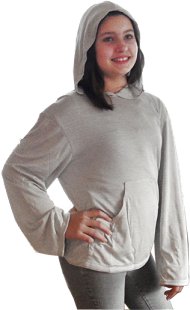
Shielding hoodie from Less EMF.

I wear protective clothing when going to people’s houses, being in cities and otherwise being around people (because basically everyone carries around a Smart Phone). I typically wear a base layer of wool long-underwear. Over that I wear one or (more often) two layers of silver threaded radiation shielding clothing. I prefer to have a layer of fabric between my protective silver clothing and my skin for two reasons: 1) to protect the metal threads from the corrosive effects of sweat and, 2) to keep the silver clothing away from direct contact with my skin. Silver is antimicrobial and the microbial community on our skin plays important roles in immune function. I also do not want metal in contact with my skin because of the potentially negative bioelectrical effects. That said, when the weather is hot, sometimes I will do without the base layer.

I have hoodies, leggings, and socks. I use an extra set of leggings to cover my face on bus or plane trips. I recline my seat and cover my face with the fabric. Then I take a nap for the duration of the trip.

When I first received my silver clothing I used my radio frequency meter to test the effectiveness of the clothing. I did this by placing the meter adjacent to a radiation source (WiFi router). Then I put the clothing between the meter and the radiation source. The measurements on the meter did indeed show a clear reduction in radiation when the silver clothing was placed between the meter and the radiation source. I wanted to make sure that it was the silver lined clothing that was reducing the radiation and not just fabric in general. So I placed other types of fabric (some much thicker than the metal clothing) between the radiation source and the meter. I did not notice much difference in the radiation level with these other fabrics. So this confirmed some level of efficacy for the protective clothing.

My other test involved putting the protective clothing on and standing near a radiation source. Using my hand I stuck the meter underneath the silver hoodie. Then I would peek down under my shirt to see the radiation reading. I would then pull out the meter and put it near the same location but on the outside of the clothing with full exposure to the radiation source. This test also showed consistent reductions in radiation with the protective clothing.

Then things became more nuanced.

I noticed that if I wore the clothing non-stop, 24 hours per day, for an extended period of time (about two weeks), I would experience fatigue and body aches. There has been some discussion that Faraday cages may interfere with natural and important bioelectrical flows.

Then I made myself sick. I was still using WiFi on my laptop at this time. I was fully covered in the protective metal clothing to reduce my radio frequency exposures until I could set up a landline and get rid of the WiFi. Importantly I was using a set of metallic silver shielding gloves. I was using my laptop computer while the power cord was plugged in. I developed chest pains, my poo turned to liquid (as if the biology in my gut was fried), and I felt fatigued. I saw a presentation by Dave Stetzer where he recommends that we only use laptops while not plugged in. He explains that when using a laptop while it is plugged it, the body is absorbing the electrons sent through the power cord. This is harmful. I called Dave and talked about my experience. I told him that I thought that the metal clothing increased the conductivity of the electrical field flowing into my body. He said my symptoms were classic electrical sickness symptoms. He thought my theory was plausible. He advised me against using the clothing.

I now unplug my power cord and use my laptop’s battery as the power supply when typing. I also quit using WiFi and have that function permanently turned off.

I struggled with whether or not to use the clothing. I wanted something to protect me from the ubiquitous radio frequencies. Clothing seemed like the best option due to the coverage and portability.

I started asking the different EMF shielding suppliers, engineers and other folks working in the field what they thought of the clothing. Opinions were split as to whether the clothing would be harmful or helpful. Some engineers think wrapping your body in a metal Faraday cage is a bad idea. Metal can act as an antenna or a shield. No one has been able to explain to me how to predict if it will act as a shield or an antenna.

The evidence that persuaded me to continue with the clothing was testimonies from some electrically sensitive people who said that it helped them. (Though there were also testimonies by electrically sensitive individuals that were negative – the clothing made them feel worse.)

Then I heard Dr. Klinghardt speak about his work and extensive clinical experience with the protective clothing. He said that his patients that use the clothing showed improvement and that the more covered these individuals were, the better the results.

I still had to reconcile my own experience of getting sick and the other people that experienced negative effects. I have developed a hypothesis and a practice based on this hypothesis. Thus far I have not become sick again and have used the clothing almost everyday for nearly a year.

I avoid electric wiring and electronics in general but especially when wearing the metal threaded clothing as I suspect that it is conductive of electrical fields. I think the ideal use for the clothing is to have it on when you are in an environment where radio waves are present but electrical fields are not. Unfortunately where there is electricity there also tends to be radio frequency radiation. So I tend to wear the clothing most of the time and generally keep my distance from wiring and electronics. I use a Faraday canopy at night so that I can take off the clothing. I also try to spend as much time as possible in relatively low radiation environments (i.e. out in nature) without the clothing. I think it is important to give the body a break from being wrapped in metal.

When riding the bus, I try to sit away from people. If the bus is full or people are evenly spaced, I try to sit in the front seat. This puts everyone and their cell phones behind me. With my protective hoodie and pants on, I have some shielding between me and other passengers except when they pass by in front of me. I also sometimes choose the back of the bus. The middle is probably the worst place to be as you are surrounded by radiation sources (if on a full bus). I also avoid sitting near the tires which can generate magnetic fields. I avoid the engine too, which can generate magnetic fields.

RF protective clothing should afford some protection from the ubiquitous microwaves at the airport and in the airplane. I am not sure how much protection (if any) the clothing offers from higher frequency radar waves. These are used by planes and airports. In planes I try to avoid a seat near the engine as the magnetic field can be quite bad there (based on personal tests). From an airplane crash survival point of view, the tail of the plane is structurally stronger. The chances of survival are statistically higher if you sit in the far back tail of the plane.

CANOPY SHIELD

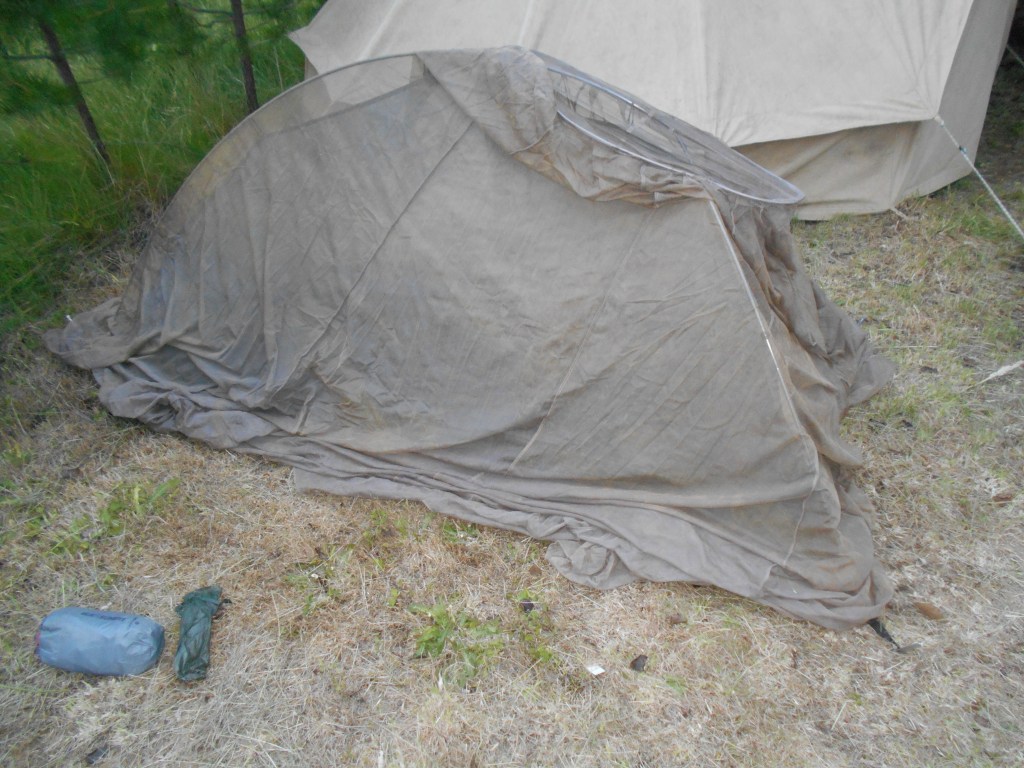
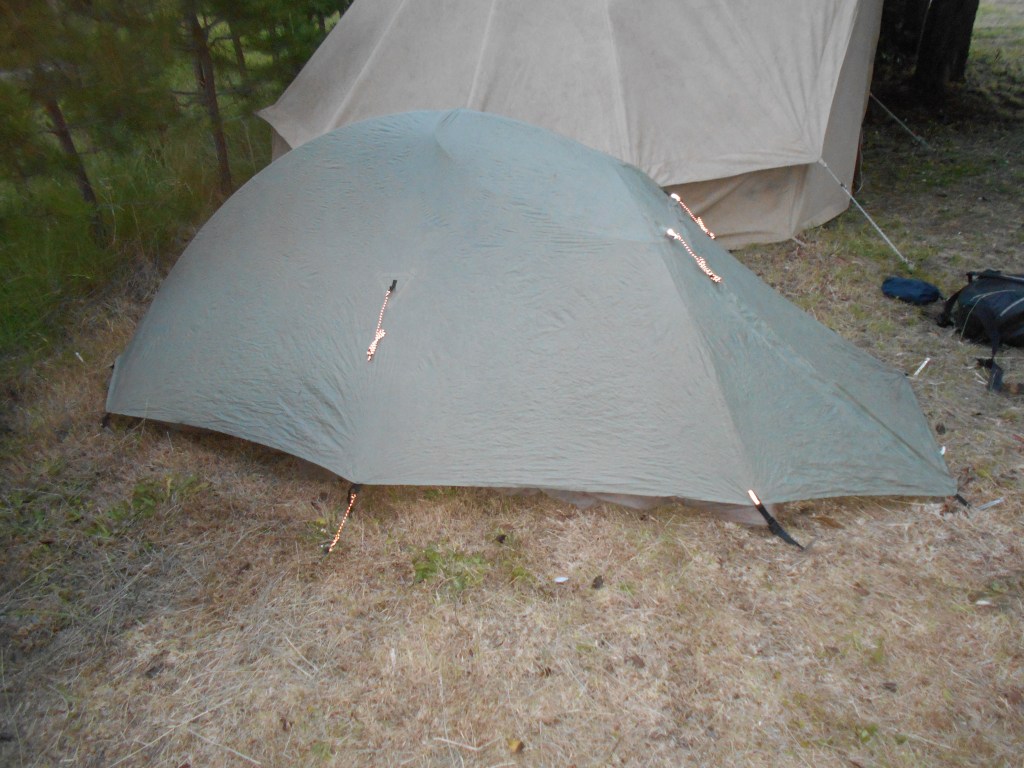
After the protective clothing, a sleeping canopy is the second most important portable shielding to have. WiFi and Smart Phones are everywhere these days and when staying at a hotel or other location, the canopy allows you to create a protected sleeping space. Being able to create a sleep sanctuary and allowing the body to heal from the damage caused by radiation is important.

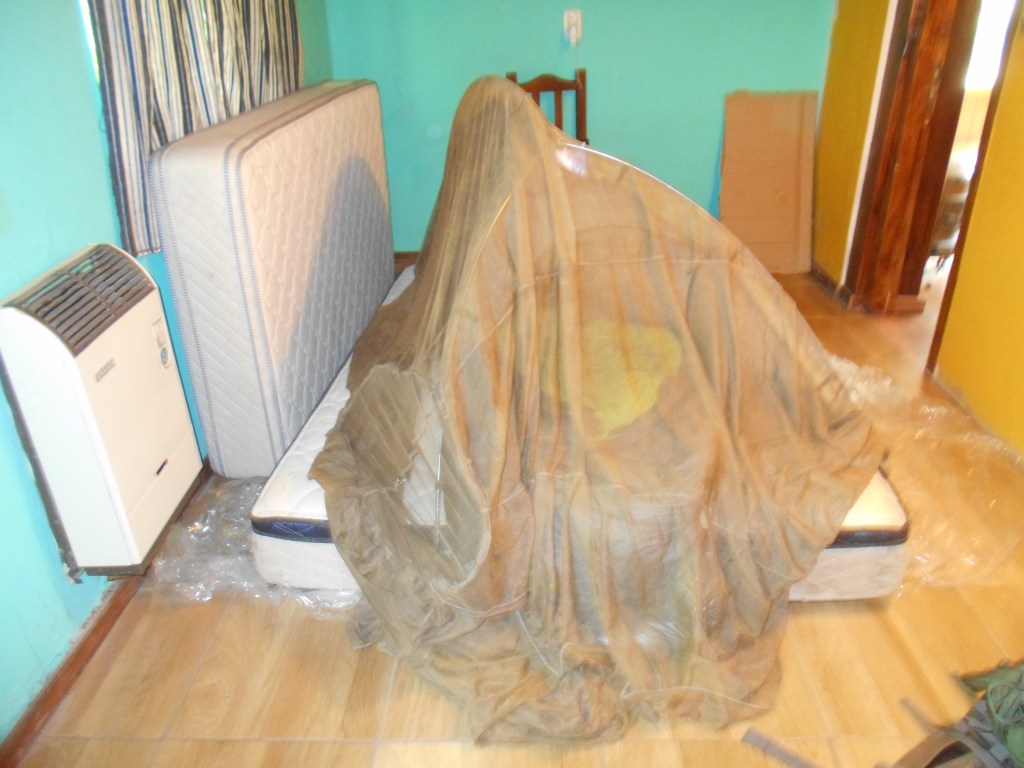
Small tent with canopy shield draped over it. Also keeps out mosquitoes.

Small tent with rain-fly covering the canopy shield.

Tent frame set up on mattress indoors with canopy draped over the top.

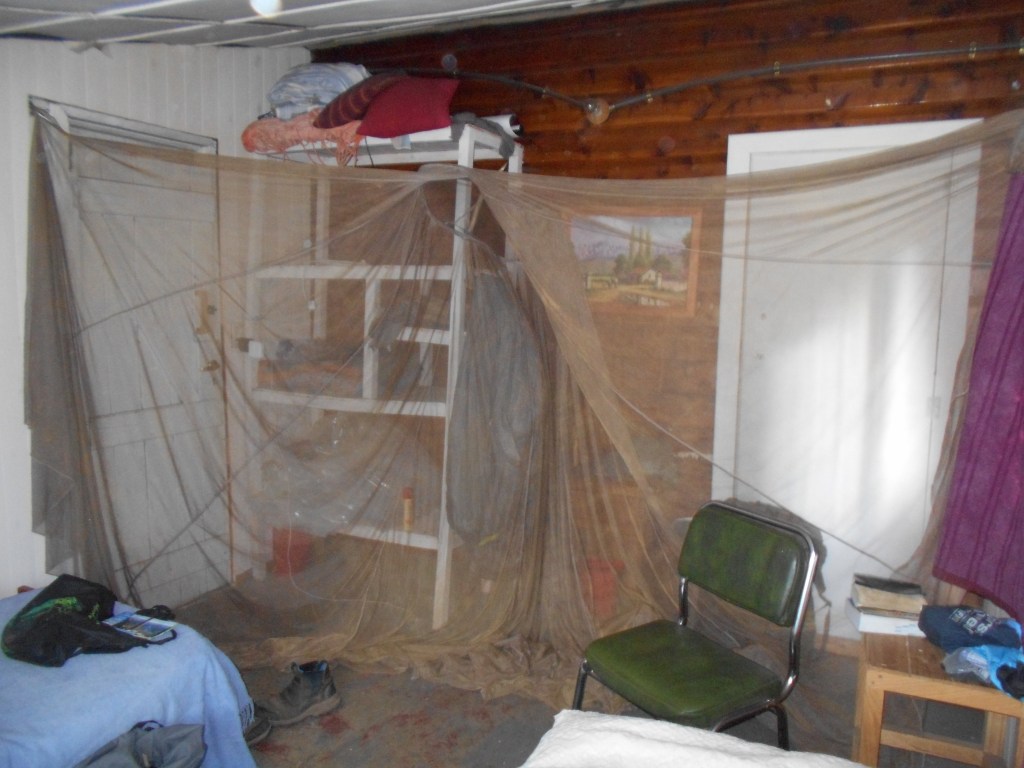
Canopy shield draped against a wall. On the other side of this wall was the only nearby source of radiation, a Smart Phone from my neighbor. This allowed me to shield my whole room by blocking that wall.

I have been very impressed by the the radio frequency radiation shielding of the canopy. It is more effective than the clothing.

For hostel bunk beds, take the bottom bed, place the canopy ring between the slats of the bed above and drape the canopy around you.

Sometimes when I have ended up in a city and stayed in a hostel that had particularly bad radiation levels I would wear both my clothing and use the canopy together through the night.

Camping is nearly always preferable to staying indoors from a radiation perspective.

Tips for canopy use:
Avoid skin contact with the canopy when sleeping as it could be conducting electrical currents from nearby electrical wiring or otherwise interacting with electromagnetic fields in the environment. Keep a sleeping bag or something else between your skin and the canopy. Keep the canopy away from electrical outlets, appliances, electronics and wiring in the wall. If you have an electrical field meter you can check to see if your canopy is conducting an electrical field.

Try to find a ground floor location to sleep. Make sure to have a radio frequency meter with you to test the radiation levels inside and outside the canopy. If a WiFi router was right underneath you, in a room below, the radiation would be reflected back to you by the canopy and actually increase the radiation exposure.

METAL DETECTORS

At airports you can find several types of body/bag scanners using different frequencies. All of them will have biological effects that are most likely harmful. The metal detectors use magnetic fields. Research on millimeter-waves indicate cause for concern. X-ray systems use ionic radiation which is known to be harmful. I avoid all of these. You can request a pat-down search and bypass the metal detectors. I have done this at several airports without any problems. If security asks why I do not want to walk through the machine I explain that the machine is bad for health.

I have a printed sheet with a description in English and Spanish about my protective metallic clothing. It explains what it is used for. I have the paper ready when going through security checks. I thought I might end up in a situation where my clothing would cause suspicion. My metallic clothing has not been noticed by security yet.

PASSPORT CHIP READERS

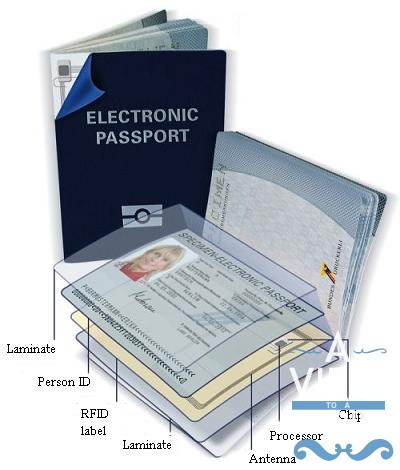
In my post TRAVEL HACK #3 – Resisting Electronic Passport Chips I explain how to avoid exposures from radio frequency ID (RFID) readers used for passports in airports.

————————-

These are some of the tactics that I employ to reduce my radiation exposures while I travel. As you can imagine I prefer to just stay somewhere safe, rather than be subject to the exposures from travel.

Mexico & Guatemala

MEXICO

The immigration process at the border was not very clear. When trying to board my bus the private security guard asked for my immigration papers. I did not have any. He said that immigration papers are needed to board but that he would let me through if I paid him some money. Another American was with me and subject to the same treatment. She spoke fluent Spanish. She worked out that we had to fill out an immigration form from a small immigration office within the bus station. A stay in Mexico for less than a week is free. She also complained (to immigration and the bus company) about the security guard’s attempt to exact money from us. She then got us escorted through security. Thus was my introduction to Mexico.

I only passed through Mexico. It took two days to bus through, north to south.

In the north of Mexico it was arid and impoverished, the ugly buildings were made of concrete and the cities were littered with garbage. From many stories over the years I understand that cartels control much of the territory.

The only type of work that I saw as worthwhile in arid northern Mexico is the regenerative grazing happening there.

ROOKIE MISTAKE #1

On a first class bus in Mexico.

Make sure you have toilet paper on you at all times in Latin America.” I had read the warning in travel books that most toilets do not provide free toilet paper. I came prepared with my own roll but it was in my big backpack that was checked under the bus. When I went to take a dump, there was no toilet paper. So I ended up washing my ass in the sink. While this might make for an interesting Youtube video… trying to stay balanced on a moving bus, in a small compartment, ass first in the sink… is not my preferred way to go.

There were many police check points where the bus was stopped and the luggage underneath was inspected. I was even woken up in the middle of the night by cops checking people’s pockets and counting their money. They were looking for drug traffickers bringing money south from the border. I gave them my sacrifice wallet. When asked for more money by the police, I insisted that the money in the wallet was all that I had (about $100 in pesos and $100 USD). They patted my pockets and counted my money. They did not find the $1,700 dollars I had stashed on me. Fortunately, despite widespread corruption among the Mexican police, these cops gave me my money back.

The bus drove wide around the capital city, not through it. I saw the urban sprawl devouring the countryside. I saw livestock standing alongside the highway, no fencing to keep them out. There were small traditional farmers with their patchwork of fields mixed in with more mechanized farms. It was strange to see the two farming styles blended together. Billboards advertised soy oil for cooking, extolling the supposed health benefits of consuming the toxic product.

Most of the time I just kept my face covered and body wrapped in protective silver shielding clothing. I only occasionally peeked out the window. The radiation levels from WiFi and cell phones on the bus are unhealthy.

In the Yucatan, it was hot and humid. I visited Bacalar and Playa Del Carmen. These are tourist cities. They were boring and ugly. Bacalar has a nice lagoon but I don’t see any reason to go to these places.

These cities had horrible food. I was lucky when I could find fresh fish or a coconut. The farmers markets had very few vendors. All were selling conventionally grown taste-less produce. I know it was taste-less because one vendor lied to me, claiming the produce was organic. It was not. I never waste food but I abandoned those vegetables because the flavor was so bad. I found a couple of health food stores in Playa Del Carmen but organic options were few. The health food stores in Mexico leaned toward serving vegan clientele. Thus the staff were often unhelpful in helping me find clean local meat.

San Cristobal de las Casas

I spent a little time in San Cristobal de las Casas, Chiapas. The city was interesting in many respects. Traditional Maya would come from the countryside to sell crafts on the street. There was no traffic laws as far as I could tell. Small cars drove down small streets, with lots of horns honking, and people going when it seems clear. Kids as young as five years old selling candy, fruit, nuts, or other goods. People double stacked on motorcycles without helmets. There was political graffiti throughout the city to go with a history of rebellion and resistance. Refugees from the Guatemalan civil war had fled to Chiapas. There is an interesting chaotic energy to the city, yet a flow to it all. There is no city like this in the USA.

On the one hand I appreciated the freedom that people have there. There were no obvious health codes, traffic codes, building codes, restrictions on commerce, etc. People just use common sense and take personal responsibility for their decisions.

Exposed wires. Electricity feeds straight into the shower head heating element. Water conducts the electricity that flows over the body. Talk about a health hazard.

On the downside of things, the lack of plumbing codes meant that I never saw a shower drain that worked well in Mexico. There was also some sketchy electrical jobs. The above shower heater style is present in much of Latin America. It is a good example of both dubious electrical work and poor plumbing. This is one of the nicer showers that I encountered too.

Unfortunately, San Cristobal is chock-a-block with radio frequency utility meters (’Smart’ meters). These lined the streets and transmitted non-stop. Smart Phones were everywhere and a big cell tower was erected in the middle of the city. The kill-grid is thoroughly installed here.

On the way across the border to Guatemala there was both a police check point and a Zapatista check-point. The check points were only a couple of dozen kilometers from each other. The Zapatistas were collecting a toll to pass. It was surreal to have both police and revolutionaries setting up traffic check points so close to each other.

I did not visit Veracruz or Oaxaca, both of which I have heard good things about. I doubt I will return to Mexico to see these places. Most everywhere these days is kinda similar. Cars, ugly cites, crappy food, cell phones and all the other garbage that comprises civilization. All the things that I am trying to get away from. As the saying goes: same shit, different pile.

GUATEMALA

La Mesilla border crossing.

The border crossing at La Mesilla, Guatemala was like an open street market. Vendors lined the streets on both sides. It was fairly chaotic with people bustling about. One could easily pass back and forth across the border without being stopped by immigration. It is an open border crossing and you volunteer to check in at the immigration offices on either side of the border. There is no fee to enter Guatemala. People would walk or drive through the border crossing with all kinds of vehicles: bikes, motorcycles, Quad bikes (ATVs), cars and so forth.

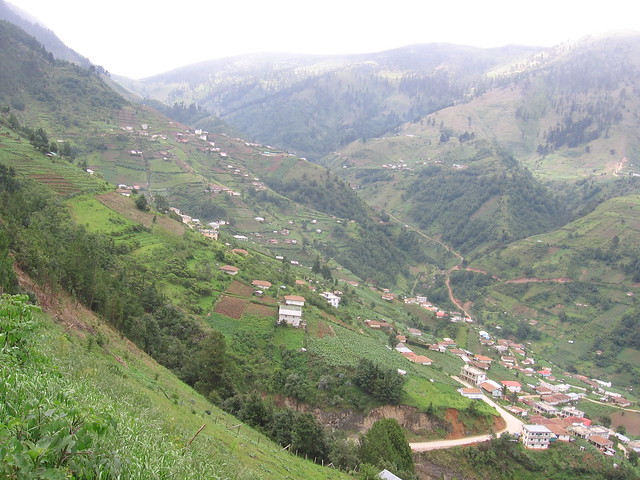
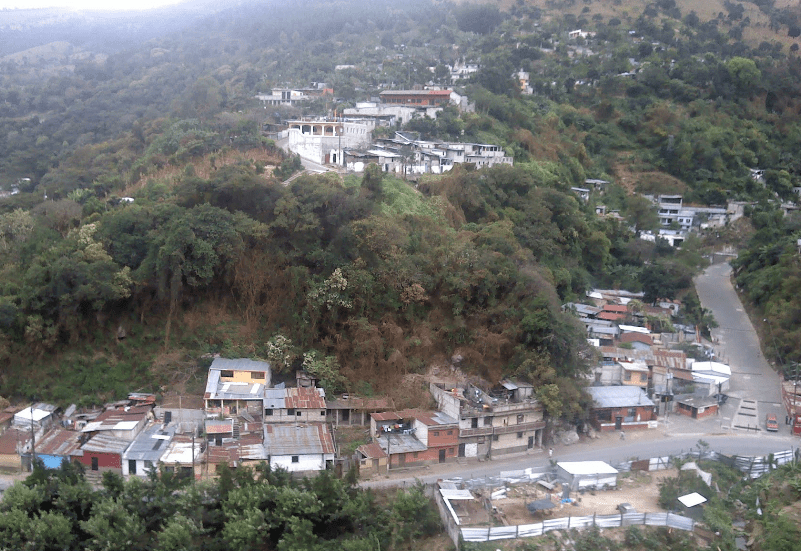
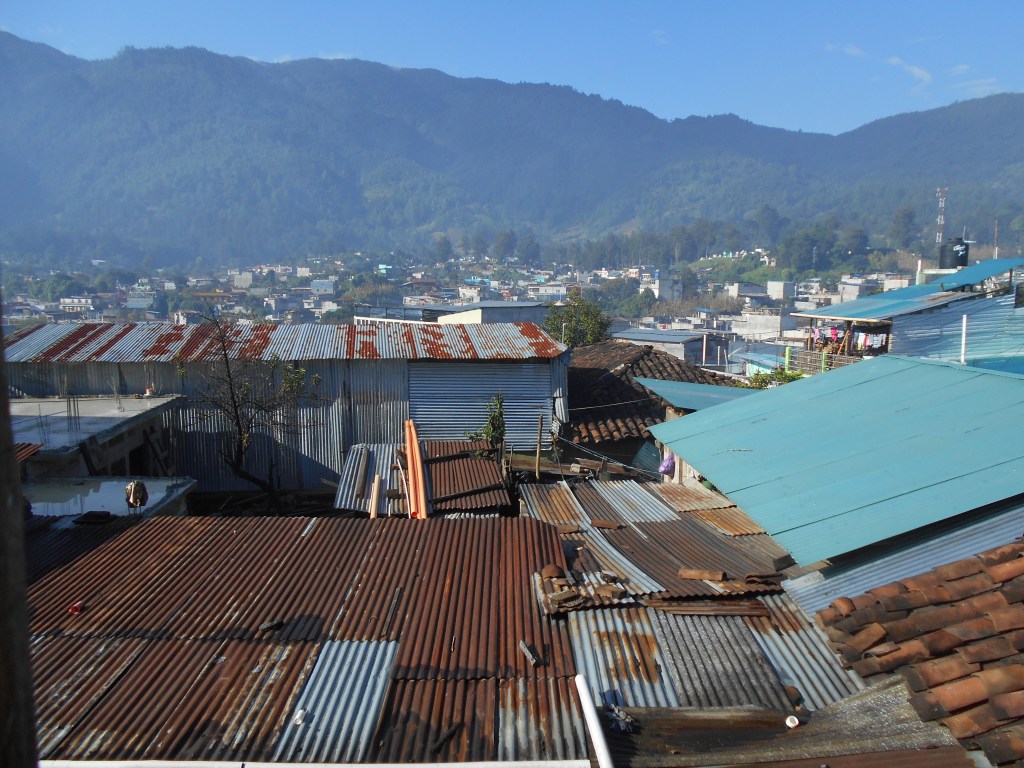
Guatemala has some impressive steep hillside living. Like most poor folks, Guatemalan’s are generally hardworking and creative.

Outside of the highlands, I found the climate to be oppressively hot and humid. I was there in the Fall.

PUBLIC TRANSIT

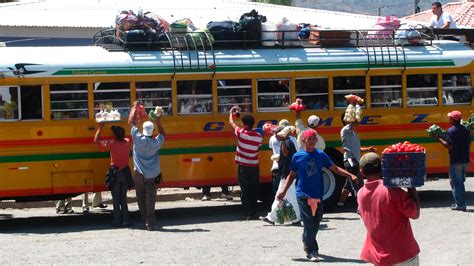
The public transit in Guatemala is the most efficient and inexpensive that I have ever encountered. There are “chicken” buses (named so because everything can be transported on them, including chickens) and collectivos (passenger vans) for public transit. They leave at frequent intervals and go to nearly every nook and cranny of the country without much waiting and no luggage fees. The operators seem self-organized and independent but I am not sure how the business model works.

From a safety point of view the freedom and chaos factor reigns here too. People ride on top of vehicles, hang off the back, passengers jump off or on while the vehicle is in motion. Some locals going for a short distance get free rides. There is a driver and an assistant who helps load luggage and collect payment. The buses belch awful clouds of diesel, making the air quality in urban areas poor.

I have seen nothing like this transit system elsewhere.

SCAMS

I was constantly on the look out for being scammed, over charged or otherwise ripped off. I was ripped off twice and avoided about six other attempts. I was basically viewed as a source of income by many people who were trying to figure out how to get money from me.

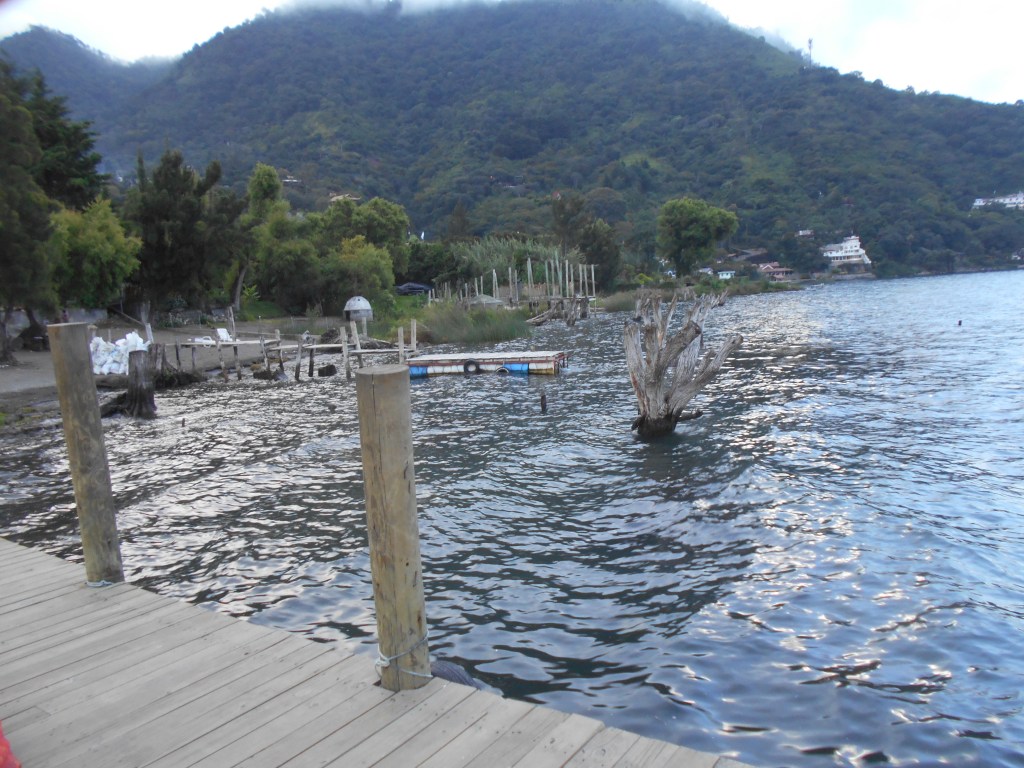
In one scam, I was in San Pedro at Lake Atitlan. I went to the dock that goes to Santiago. A man approached me, said he was the boat captain and helped me load my things onto the boat. When he told me the cost to ride the boat, I complained that the amount he wanted was expensive. It was a little over double what it should have been for the distance based on prior boat trips in the area. He said that the price is what it is. I paid him. He wandered off as I sat there waiting with the other passengers. Then I realized a second thing that seemed wrong. On the other boat trips the money was collected upon departure, not arrival. I asked another passenger if I am supposed to pay before or after the trip. She told me that payment is after the trip. I went and found the guy and demanded my money back. After some resistance he complied. Then he stood blocking the dock and said I could not board his boat. At this point two bystanders, younger men told me that the man was in fact the captain. They told me that he is honest and telling me the truth. After a few exchanges in broken English/Spanish with the bystanders, I started doubting myself. I thought that maybe things are different with this boat operator as they seem to operate independently. I gave him back the money and apologized. When we departed, I noticed that there was a different driver for the boat. That’s when I knew I had been right about my suspicions. Upon arrival at my destination, the actual captain asked for payment. I told him pago ya (which should have actually been he pago ya) for “I have paid already.” He let me pass without payment. The woman passenger who helped me realize that I had been scammed was standing close by. I think she was going to help me explain what happened. She smiled at me when I said that I paid already and I avoided having to pay a second time. I over paid a scammer and got a free ride from the real captain. Thus the world goes round.

Another incident that I know of was being over-charged by a taxi driver. In Guatemala I did not see a taxi with a meter, so basically you have to negotiate a rate. This is best to do before getting in. I had made a point of asking bus drivers what the cost of a taxi should be. It is best not to ask the taxi driver themselves, initially, as they are likely to boost the price. Unfortunately my comprehension of Spanish was quite poor at this time and I misunderstood what the bus driver told me. I should have asked him to write down the amount. After traveling a short distance, I was dropped off. Thinking about things afterward, I realized that I was charged an extra 50% above the going rate.

In total I believe that I lost less than $5 from these scams in Guatemala. There is the possibility that I might have been overcharged in other instances.

The whole time in Guatemala I did not feel like I could trust anyone and was on-guard to monitor my things.

I did meet some nice people. But the pursuance of Western lifestyles left me disinterested in the trajectory of most people.

FOOD

Food here was better than in Mexico. Many of the people in the places I visited were living subsistence lifestyles. At farmer’s markets I was able to find about 1 in 4 vendors that said they do not use agricultural chemicals in the production of their meat, fruit or veggies. Farmers sold produce everyday of the week in many towns.

SUBSISTENCE

I visited some farms outside of the highland town of Todos Santos. There was no electricity. Many lived in earthen houses with dirt floors and tin roofs. Traditional construction was giving way to new construction that used concrete and cinder block.

People here were poor. Despite this, almost everyone managed to have a cell phone. Traditional diets were giving way to junk food. Livestock and dogs in Guatemala were almost always starving with ribs showing and no body fat.

Everywhere in Guatemala people throw garbage on the ground. There is no trash service. I saw several “trash dumps” which were a hillside where the local community tosses garbage over the side of the road. Littering makes sense in this context. There were no public trash cans that I saw. If you take garbage home, you just have to haul it back out. The place that you would haul it to is some ravine a few kilometers down the road. So does it matter if garbage is concentrated and dumped into a ravine or dispersed in the towns and cities?

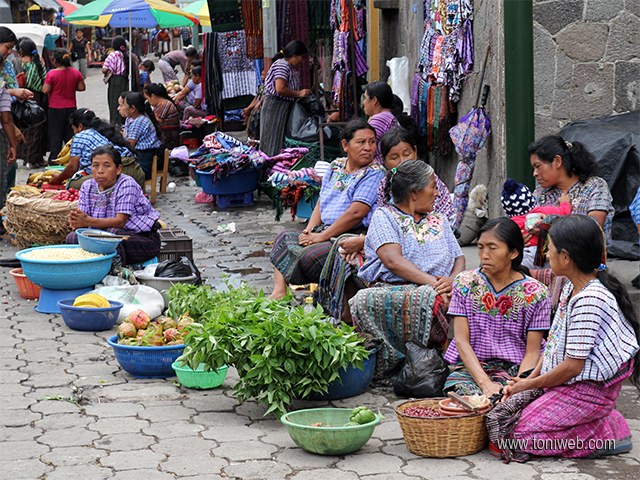
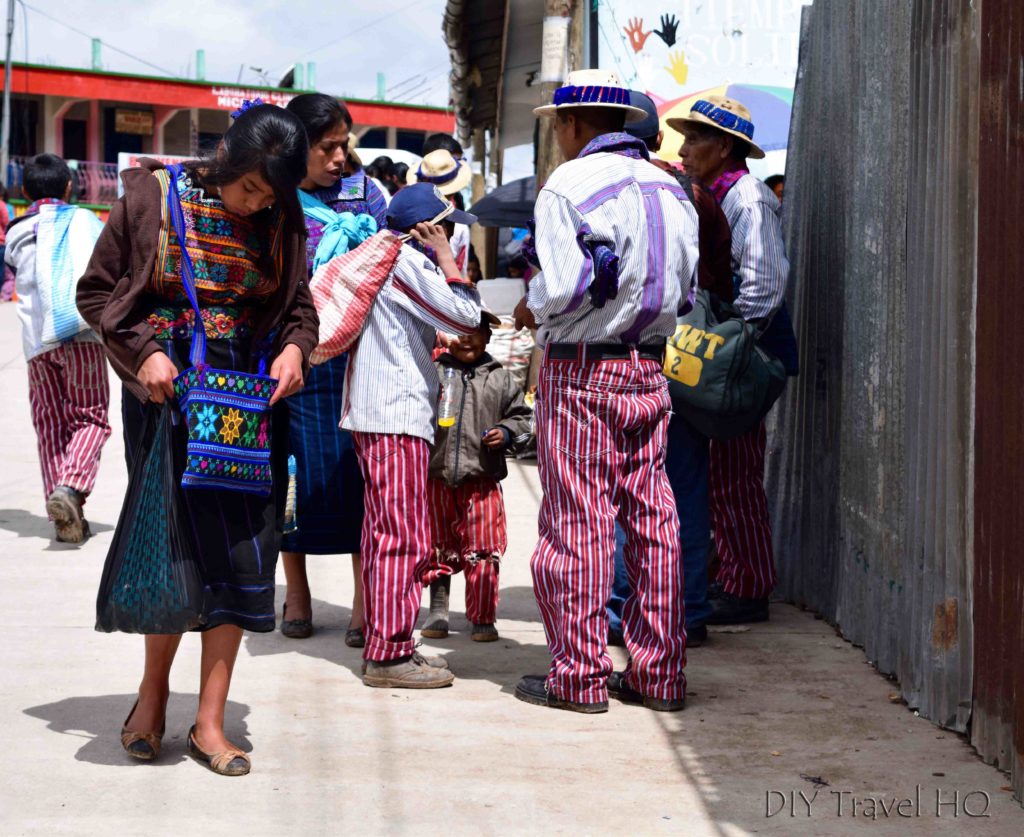
In the highland villages there was still traditional clothing being made. Different social groups could be distinguished by their different attire.

SEYMUC CHAMPEY

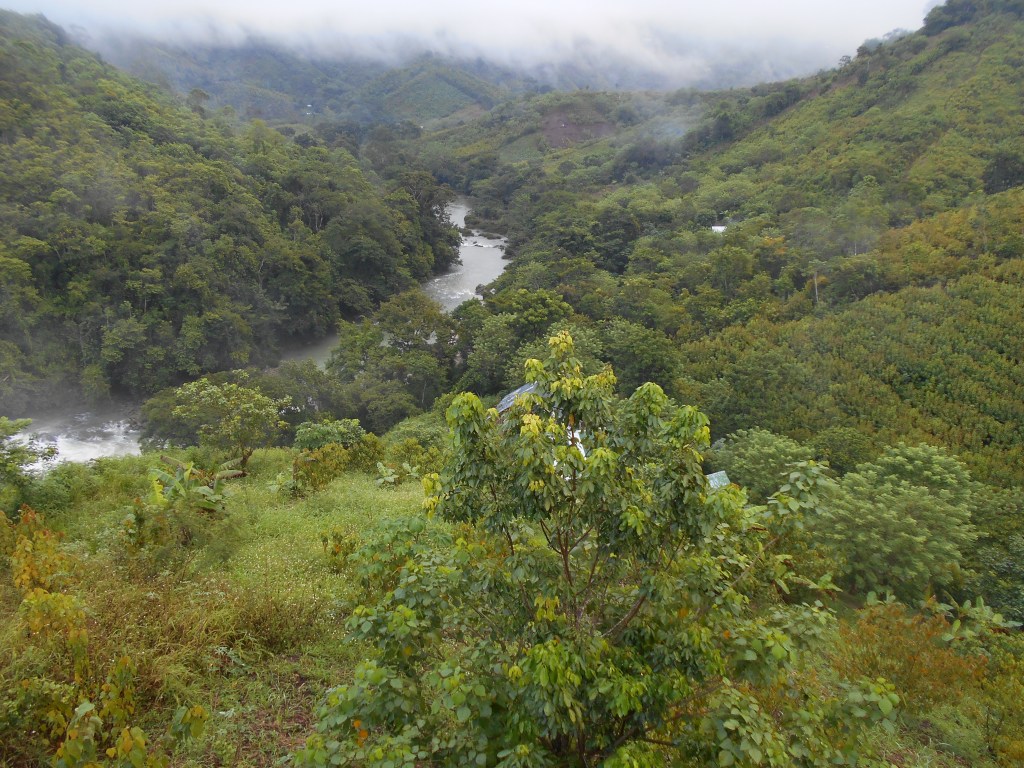
Río Cahabón

For the most part the natural beauty that I saw in Mexico and Guatemala did not stand out to me.

I generally avoid tourist attractions but Seymuc Champey was recommended to me by a friend. I did not make it to Seymuc exactly but spent about 5 days in the same area on the Río Cahabón. This is the one place where the beauty of the river and jungle was noteworthy. The Maya live along foot trails, in small houses throughout the forest.

Unfortunately a dog attacked me here, ripped my wool leggings and drew blood. I got sick from the water (probably in the shower) after the first day, following the dog bite and physical exhaustion from hiking. Nearly the whole time I was there, I was sick. The climate was hot and humid which did not help.

SPANISH LESSONS

Guatemala is the cheapest place to learn Spanish in Latin America. I knew I would need many hours of practice, so I wanted to have my money for Spanish lessons go as far as it could. Additionally, I had the idea that I would go to a poor rural Maya area to get lessons. I wanted to be able to negotiate a cheap rate, have a low cost of living, experience life in a small town/village and give my money to a poor rural community.

My plan to learn Spanish in Guatemala was basically a failure. I was visiting the areas that were hit the hardest during the Guatemalan civil war. These are among the most impoverished areas of Guatemala. Spanish is a second language for the Maya. Many rural Maya do not speak Spanish and those that do may not speak it well. Finding quality instruction was hard.

I could have just gone to one of the many Spanish schools in the cities, except that I hate cities.

At some point in my journey I realized that my several months of ProSpanish lessons had given me enough foundation to get around. I decided to just get down to South America, figure out where I want to be and then study whatever version of Spanish is there. Every country has it’s differences.

The Next Collapse of Mayan Civilization

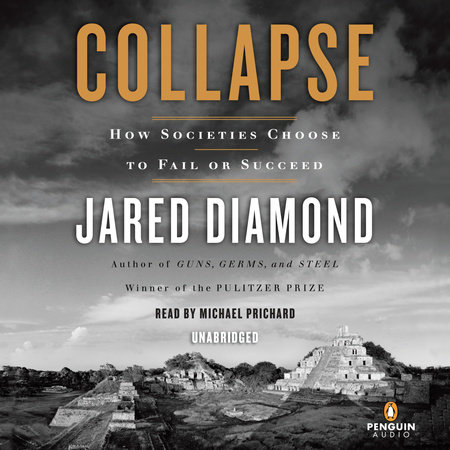
In Jared Diamon’s book Collapse he identifies 5 factors that lead to the collapse of societies. In the pre-Columbian collapse of Mayan civilization in the eighth century, four out of five of these factors were present. The Mayan civilization is considered to be the most culturally “advanced” society in the pre-Columbian Americas. It was the only civilization with extensive preserved writing. The Maya are located within Mesoamerica which extends from central Mexico to Honduras. It is a region that spawned the Aztecs and other civilizations. The other major center of pre-Columbia civilization is the Inca empire of South America.

The five factors and their role in the collapse of the ancient Maya then and today:

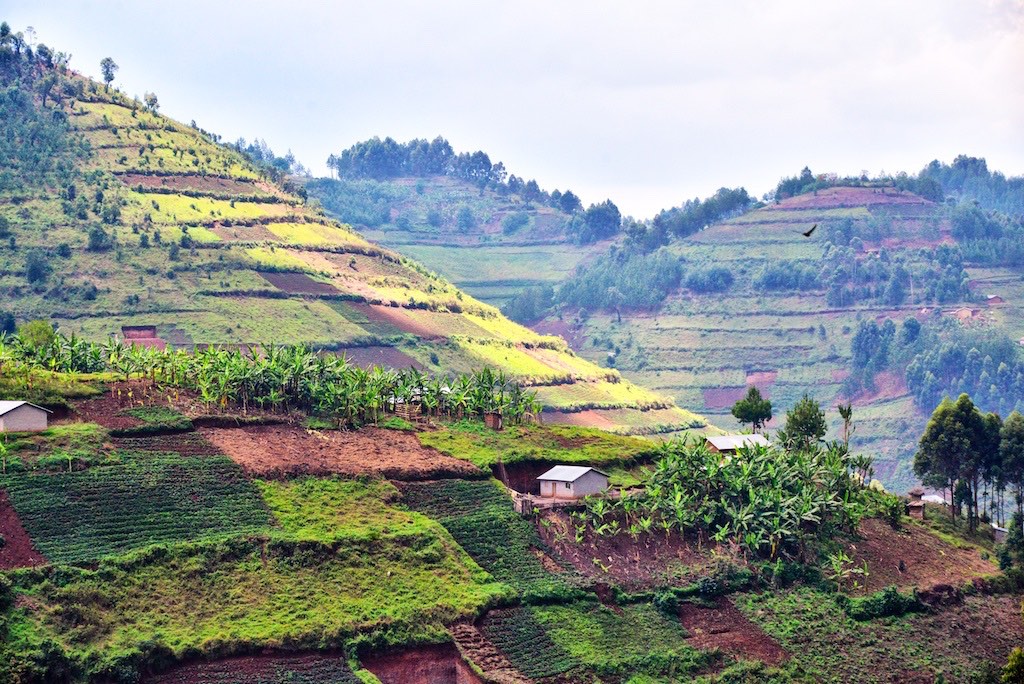
1) Environmental degradation. Widespread deforestation and soil erosion lead to the demise of ancient Maya.

Today such practices continue with the production of annual crops (mostly corn) on steep hillsides and the use of agrochemicals.

2) Climate changes and drought. These contributed to the collapse of the ancient Maya. Probably repeatedly.

The causes and effects of climate change remain a hotly debated topic today. The particulars of this debate aside, there are many news reports of drought and temperature increases leading to crop failure and migration.

3) Internal hostility among the ancient Maya did play a significant role in the prior collapse.

As of now internal strife does not seem to be a major factor in the lives of contemporary Maya. The transnational economy allows for the flow of resources and people in and out of Guatemala. When certain key resources like gasoline run out, we may well indeed see an increase of internal hostilities.

4) A cultural political focus of kings to prioritize war and erecting monuments rather than addressing underlying problems was the final element in the demise of the ancient Maya.

Political corruption and television/internet distractions remain widespread today.

5) Trade or the cessation of trade with nearby friendly societies does not appear to be important in sustaining the ancient Maya. Nor does it seem to have played a role in the downfall of the Maya.

Today cessation of trade due to dwindling resources will most likely be a major factor in the crash of today’s Maya people.

In addition to these five factors, I will add a new one. One that will likely overshadow the other factors and have lasting effects that could lead to our demise as a species. This factor deals with our biological break down both mentally and physically to the point where a complex society cannot be maintained. This factor I will term environmental toxicity.

6) Environmental toxicity. It encompasses all of the industrial pollutants, electromagnetic radiation, genetically modified organisms, drugs that interfere with bodily functions, diets that are high in sugar/carbohydrates/artificial ingredients/biocides, plastics, fire retardants, among other toxins.

The Maya have replaced much of the traditional diet with soda pop and processed junk food. The use of agrochemicals has become widespread. There are pharmacies everywhere in Guatemala. Even those with few possessions own a Smart Phone. This combination of toxins guarantees the destruction of the Maya and many other societies.

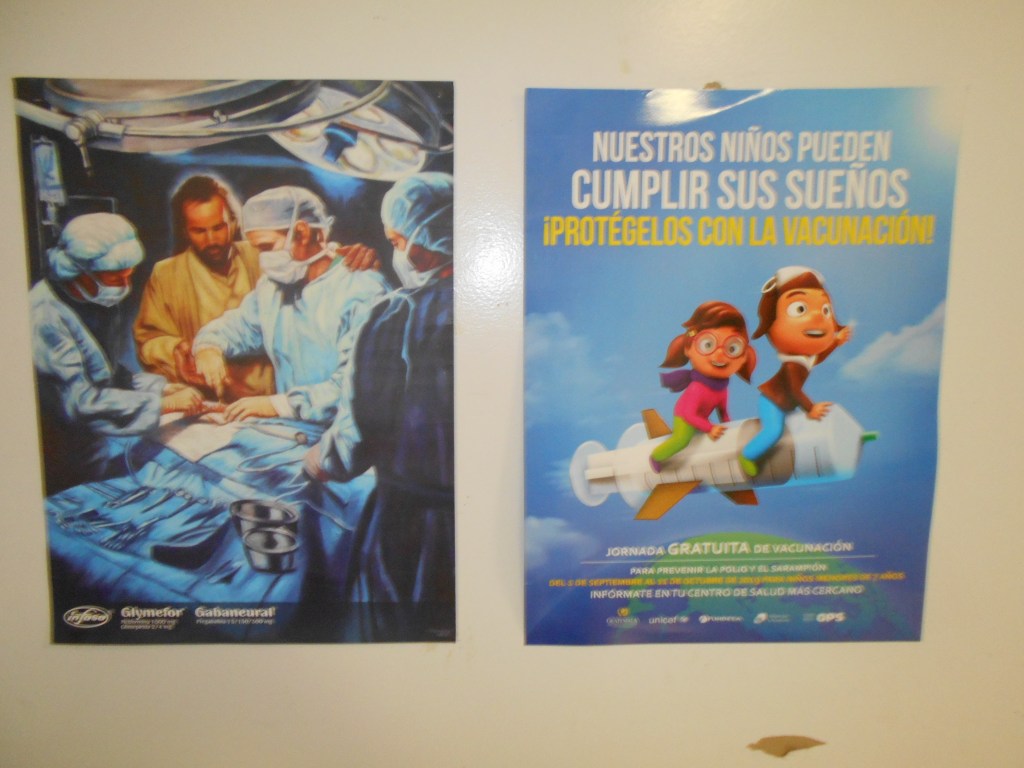
In my travels I sent emails to medical personnel in the regions that I visited. I did this because many people that practice medicine want to help others. Also, even in these impoverished areas doctors get some kind of education and can verify my warnings by conducting their own research. Unfortunately medical training (i.e. brainwashing) remains highly corrupted by pharmaceutical interests. For example, I went into a medical facility to discuss the danger of a cell phone tower that was in the middle of a Mayan village. Inside were these two posters…

The poster on the left shows Jesus guiding the hand of a surgeon. It is an advertisement by a drug company using religious imagery in a highly Christian society.

The poster on the right is encouraging vaccination. The caption translates to:

“Our children can fulfill their dreams
Protect them with vaccination!”

The irony is all a bit sickening.

Despite this, I think that one strategy to make change is to inform medical personnel, so that they can then educate the population. The following is an email that I sent out to medical professionals in Guatemala. Spanish is first, English follows.

Soy un administrador de tierras, ecologista e investigador de los Estados Unidos. Mi trabajo implica un diseño holístico de la granja y la comunidad que incorpora el apoyo al ecosistema local y el fortalecimiento de la resistencia local.

Estoy visitando Guatemala para estudiar español en mi camino a América del Sur, donde pienso vivir.

Sólo he estado en la zona durante un corto tiempo pero tengo varias observaciones importantes que quiero compartir con ustedes.

Nuestra civilización global se derrumbará en los próximos años porque los humanos están agotando los recursos del planeta de una manera insostenible. Todos nosotros tendremos que adaptarnos a un nivel de vida mucho más bajo que el que tenemos ahora. La condición de la gente, los sistemas que están en su lugar, y la salud de la ecología local en el momento del colapso determinará nuestro destino.

Veo tres amenazas principales para la gente de aquí. He puesto estas amenazas en orden de la amenaza más inmediata a la menos inmediata. Todas ellas son amenazas muy serias para las generaciones futuras y actuales.

LOS TELÉFONOS MÓVILES Y LOS DISPOSITIVOS DE RADIACIÓN INALÁMBRICOS

Se han realizado investigaciones que se remontan a muchas décadas sobre el daño causado por la radiación de ondas de radio. A pesar de este hecho, se han fabricado y vendido productos para el consumo público a personas de todo el mundo sin ninguna prueba de seguridad biológica.

Aunque algunos médicos y científicos han estado advirtiendo al público durante años sobre los daños causados por el WiFi, los teléfonos celulares, los medidores digitales de radiofrecuencia y otras fuentes de radiación de ondas de radio, la distribución de estas tecnologías ha explotado en los últimos años.

Hay un encubrimiento masivo por parte de la industria para ocultar el hecho de que hay efectos muy graves para la salud por las microondas y otras formas de radiación electromagnética.

Actualmente hay más de 10.000 estudios científicos que vinculan el uso de estas tecnologías con un amplio espectro de efectos biológicos a lo largo del tiempo.

Algunos de los efectos que están bien documentados en la literatura científica incluyen: Daños y mutaciones en el ADN de nuestras células, infertilidad, disfunción hormonal, trastornos metabólicos, cáncer, estrés oxidativo (que juega un papel clave en todas las enfermedades crónicas), aumento del riesgo de demencia, autismo, insuficiencia cardíaca y muchos otros problemas.

Los síntomas neurológicos tempranos más comunes de la radiación electromagnética (que se han convertido en quejas muy extendidas en las sociedades tecnológicamente avanzadas) incluyen: trastornos del sueño/insomnio; fatiga/cansancio; dolor de cabeza; depresión/síntomas depresivos; falta de concentración/atención/disfunción cognitiva; mareos/vértigo; cambios en la memoria; inquietud/tensión/ansiedad/estrés/agitación; irritabilidad; y reacciones alérgicas en la piel.

Esta tecnología está teniendo impactos devastadores en las personas y en otras formas de vida, ya que nuestras exposiciones aumentan exponencialmente de año en año. El alcance total del daño sólo está empezando a ser entendido. Sin embargo, puedo decirles una cosa con certeza. Si los teléfonos celulares, WiFi y otras tecnologías de radiación inalámbricas no se detienen muy pronto, la salud de su gente será destruida. Algunos ya creen que puede ser demasiado tarde para evitar muchos efectos graves que tienen un largo período de latencia antes de ser detectados.

Se puede encontrar más información en los siguientes enlaces.

Enlaces en español:
https://www.5gspaceappeal.org/the-appeal (Comience aquí -Versión en español en el sitio)
https://www.peccem.org/inicio.html
http://www.avaate.org

Universidad de Nacional de La Plata y la facultad de Ciencias Médicas de la Universidad de Nacional de Cuyo: http://cem.med.unlp.edu.ar/

Enlaces en inglés (puedes usar un traductor en línea para leerlos en español):
https://bioinitiative.org/
https://ehtrust.org/
https://mdsafetech.org/

AGRÍCOLA

En esta región el terreno es empinado. Cuando la gente tala el bosque para hacer campos para cultivos anuales, comienza un proceso de erosión del suelo. Con cada año sucesivo, el suelo se vuelve cuesta abajo. El viento y especialmente la lluvia lavan el suelo suelto. El suelo termina como sedimento en los arroyos, dañando a los peces y otras formas de vida en los ríos. Con el tiempo se pierde todo el suelo fértil, reduciendo el rendimiento y el valor nutritivo de los cultivos producidos. Entonces la gente se ve obligada a trasladarse a una nueva zona para comenzar el proceso de socavar el medio ambiente de nuevo. Este patrón sólo puede continuar por un tiempo antes de que el ecosistema y la sociedad que depende de él se derrumbe.

El uso de fertilizantes sintéticos y herbicidas/pesticidas sólo exacerba el problema. Estos químicos dañinos contaminan nuestros cuerpos, la tierra y los ríos. Estos químicos no producen alimentos saludables para el consumo, sino que hacen que los alimentos sean tóxicos. Estos químicos y la labranza son dañinos para la vida en el suelo, la vida que es necesaria para mantener el ecosistema intacto y la gente sana.

Cuando diseño una propiedad, cualquier pendiente superior a 10 grados sólo se planta en cultivos perennes o muy ligeramente pastoreados por animales durante un período muy corto. (Las plantas nunca se pastan hasta el suelo, dejando al menos el 50% de la planta madura. Luego se permite que las plantas se recuperen antes de volver a pastar). Siempre debe haber una cubierta de plantas y mantillo en las laderas. Aconsejo plantar árboles madereros, árboles de frutos secos, bayas de arbusto y otros cultivos perennes en las laderas con una inclinación superior a los 10 grados. Estos cultivos no requieren una alteración anual del suelo.

Cualquier área con una pendiente menor a 10 grados puede ser plantada en anuales. El aterrazamiento puede ser útil para la retención del suelo en los sistemas de producción anual, pero no será suficiente en las zonas más inclinadas para invertir la pérdida de suelo.

El objetivo de toda la agricultura debe ser apoyar la biología que construye el suelo. A ello seguirá la mejora de los rendimientos y la salud de las personas. Es necesario que se incorporen formas de medir y seguir el desarrollo de la capa superior del suelo. Se deben fomentar las prácticas que aumenten el desarrollo de la capa superior del suelo, mientras que las que lo deterioren deben ser eliminadas.

Me doy cuenta de que esto requeriría cambios significativos en la dieta y en los métodos agrícolas. También entiendo la carga financiera que muchas familias enfrentan y las presiones económicas para obtener un rendimiento anual. Se están desarrollando modelos agroforestales creativos para ofrecer a la gente un modelo de transición. Éstos proporcionan ingresos anuales hasta que se establezcan y sean productivos los cultivos perennes a largo plazo.

Será necesario pensar de manera creativa, investigar y tomar muchas iniciativas para encontrar una solución. Tal vez pueda dirigirlos a recursos que ayuden a la transición.

“COMIDA” Y AZÚCAR PROCESADOS DE LA BASURA

Otro gran problema para la salud de la gente de aquí (y de muchas partes del mundo) es el consumo de “alimentos” basura procesados. Estos alimentos están hechos con varios sabores y colores artificiales. Normalmente contienen pesticidas, herbicidas, organismos genéticamente modificados y otros ingredientes dañinos utilizados en el proceso de producción. Todos los envases de estos alimentos basura terminan como basura y contaminación en el medio ambiente. Estos alimentos chatarra están diseñados para ser adictivos, típicamente son salados o dulces. Estos productos se hacen y venden con el único propósito de obtener un beneficio a expensas de la salud y la vida de las personas. Hay muchos problemas de salud asociados con una dieta que incorpora alimentos procesados: desde la obesidad, el desarrollo inadecuado del cuerpo, hasta el cáncer y así sucesivamente.

La industria farmacéutica y los dentistas obtendrán grandes beneficios de una población enferma con una dieta de comida chatarra, pero no será un pueblo fuerte que pueda persistir a través de los desafíos que se avecinan.

Se necesita una educación nutricional basada en la antropología nutricional. Una dieta de alimentos frescos de temporada cultivados orgánicamente o cosechados en forma silvestre es importante. Comer una amplia variedad de alimentos locales y obtener mucha grasa animal es fundamental.

La eliminación de los alimentos envasados es necesaria para crear un pueblo saludable.

CONCLUSIÓN

Se requerirá previsión y valor para entregar la verdad a la gente y trabajar para encontrar una solución. Si no lo hace, significará la destrucción de su pueblo. Espero que este mensaje sea útil para asegurar la continuidad de la humanidad en la Tierra.

Háganme saber si tienen alguna pregunta o comentario.

He utilizado un traductor para su documento. Me disculpo por cualquier error en la traducción.

Picture of Nebaj. This area was among the hardest hit during the civil war.

ENGLISH


I am a land manager, ecologist and researcher from the United States. My work involves holistic farm and community design that incorporates support for the local ecosystem and the strengthening of local resilience.

I am visiting Guatemala to study Spanish on my way to South America where I plan to live.

I have only been in the area for a short time but I have several important observations that I want to share with you.

Our global civilization will collapse in the coming years because humans are exhausting the planet’s resources in an unsustainable way. All of us will have to adapt to a standard of living much lower than what we have now. The condition of the people, the systems that are in place, and the health of the local ecology at the time of collapse will determine our fate.

I see three primary threats to the people here. I have put these threats in order of the most immediate threat to the less immediate. All of them are very serious threats to future and current generations.

CELLPHONES AND WIRELESS RADIATION DEVICES

There has been research going back many decades on the harm caused by radio wave radiation. Despite this fact, products for public consumption have been manufactured and sold to people throughout the world without any biological safety testing.

Even though some doctors and scientists have been warning the public for years about the harm caused by WiFi, cell phones, digital radio frequency utility meters and other sources of radio wave radiation, the distribution of these technologies has exploded in recent years.

There is a massive cover-up by industry to hide the fact that there are very serious health effects from microwaves and other forms of electromagnetic radiation.

Currently there are more than 10,000 scientific studies that link the use of these technologies with a broad spectrum of biological effects over time.

Some of the effects that are well documented in the scientific literature include: DNA damage and mutations in our cells, infertility, hormone dysfunction, metabolic disorder, cancer, oxidative stress (which plays a key role in all chronic illnesses), increased risk of dementia, autism, heart failure and many other problems.

Common early neurological symptoms of electromagnetic radiation (which have become extremely widespread complaints in technologically advanced societies) include: sleep disturbance/insomnia; fatigue/tiredness; headache; depression/depressive symptoms; lack of concentration/attention/cognitive dysfunction; dizziness/vertigo; memory changes; restlessness/tension/anxiety/stress/agitation; irritability; and allergic reactions on the skin.

This technology is having devastating impacts on people and other forms of life as our exposures increase exponentially from year to year. The full scope of harm is only beginning to be understood. I can tell you one thing for certain though. If cell phones, WiFi and other wireless radiation technologies are not stopped very soon, the health of your people will be destroyed. Some already believe that we may be too late to avoid many serious effects that have a long latency period before being detected.

More information can be found at the following links.

Links in Spanish:
https://www.5gspaceappeal.org/the-appeal (Start here -Spanish version on site)
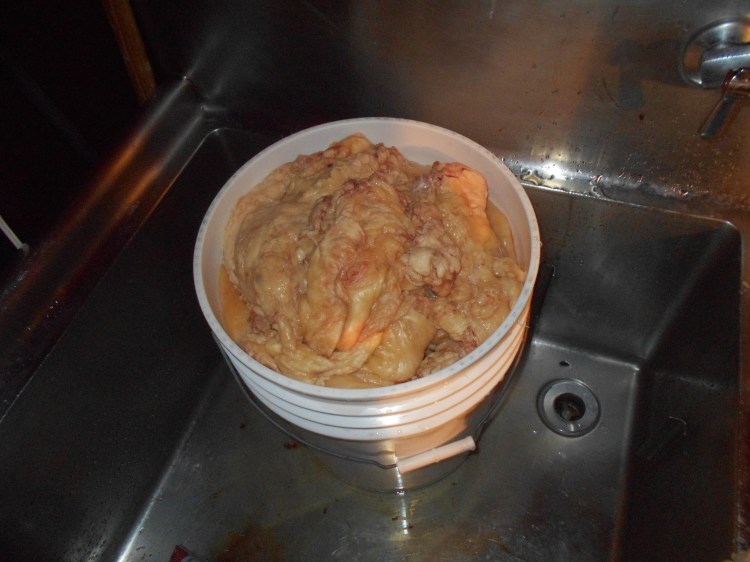
https://www.peccem.org/inicio.html
http://www.avaate.org

Universidad de Nacional de La Plata y la facultad de Ciencias Médicas de la Universidad de Nacional de Cuyo: http://cem.med.unlp.edu.ar/

Links in English (you can use an online translator to read them in Spanish):
https://bioinitiative.org/
https://ehtrust.org/
https://mdsafetech.org/

AGRICULTURAL

In this region the terrain is steep. When people clear the forest to make fields for annual crops, they begin a process of soil erosion. With each succeeding year the soil is turned downhill. Wind and especially rain wash away the loose soil. The soil ends up as sediment in streams, harming fish and other life in the rivers. In time all of the fertile soil is lost, reducing yields and the nutritional value of crops produced. Then people are forced to move on to a new area to begin the process of undermining the environment again. This pattern can only go on so long before the ecosystem and the society that depends on it will collapse.

The use of synthetic fertilizers and herbicides/pesticides only exacerbate the problem. These harmful chemicals pollute our bodies, the land, and rivers. These chemicals do not produce healthy food for consumption, it makes food toxic. These chemicals and tillage are harmful to the life in the soil, the life that is necessary to keep the ecosystem intact and the people healthy.

When I design a property, any slope over 10-degrees is only planted in perennial crops or very lightly grazed by animals for a very short period. (Plants are never grazed to the ground, leaving at least 50% of the mature plant behind. Then the plants are allowed to recover before grazing again). There always needs to be a ground cover of plants and mulch on slopes. I advise planting timber trees, nut trees, bush berries and other perennial crops on slopes steeper than 10-degrees. These crops do not require annual disturbance of the soil.

Any area with a slope that is less than 10-degrees can be planted in annuals. Terracing can be helpful for soil retention in annual production systems but will not be sufficient in steeper areas to reverse the loss of soil.

The focus of all farming needs to be on supporting the biology that builds soil. The improved yields and health of the people will follow. There needs to be the incorporation of ways to measure and track topsoil development. Practices that increase top soil development are to be encouraged while those that deteriorate it are to be eliminated.

I realize that this would require significant changes in the diet and agricultural methods. I also understand the financial burden many families face and the economic pressures to get an annual yield. There are creative agroforestry models being developed to offer people a model of transition. These provide annual income until long term perennials are established and productive.

It will require some creative thinking, research and much initiative to come up with a solution. I may be able to direct you to resources that would help with the transition.

PROCESSED JUNK “FOOD” AND SUGAR

Another major problem to the health of the people here (and many parts of the world) is the consumption of processed junk “foods.” These foods are made with various artificial flavorings and colors. They typically contain pesticides, herbicides, genetically modified organisms and other harmful ingredients used in the production process. All of the packaging from these junk foods ends up as garbage and pollution in the environment. These junk foods are designed to be addictive, typically being salty or sweet. These products are made and sold for the sole purpose of making a profit at the expense of people’s health and lives. There are many health problems associated with a diet incorporating processed foods: from obesity, improper body development, to cancer and so on.

The pharmaceutical industry and dentists will reap big profits from a sick population on a junk food diet but it will not make for a strong people that can persist through the challenges ahead.

Nutritional education based on nutritional anthropology is needed. A diet of fresh, seasonal, organically grown or wild harvested food is important. Eating a wide variety of local foods and getting plenty of animal fat is critical.

Eliminating packaged food is necessary for creating a healthy people.

CONCLUSION

It will require foresight and courage to deliver the truth to people and to work to find a solution. Failure to do so will mean the destruction of your people. I hope that this message will be helpful to insuring the continuation of humanity on Earth.

Let me know if you have any questions or comments.

I used a translator for his document. I apologize for any errors in the translation.

TRAVEL HACK #3 – Resisting Electronic Passport Chips

I met another American on my trip. I explained to her the purpose of my journey: to find a safe refuge away from civilization where I can watch from a distance as our global society collapses. I talked with her a bit about the growing surveillance grid in many countries.

Interestingly she pulled out her passport. She showed me the back where there had been some melting of the cover in the shape of the embedded electronic chip. She explained that she put her passport in a microwave oven for 10 seconds. (Just don’t over cook it). The metallic chip sparked from the microwaves. She said it was disabled. (Note: you will probably need to be at least 40-60 feet (13-20 meters) away from a microwave oven to avoid biological harm. I do not endorse the use of microwave ovens. But if you decide to use a microwave oven, I suggest running as fast as you can away from the appliance once you press start.) Other websites have suggested impact with a hammer.

She explained that it is illegal to intentionally damage your passport chip. If asked about the chip she tells border guards that her passport got wet (it did look a bit soiled). She said that you could also say that your passport was left in a car on a hot day. Or if using a hammer: “I had my passport in my coat pocket and shut the door on it…” Whatever the explanation might be, you cannot be barred entry into a country based on a broken electronic chip. Your passport works like normal with or without the chip. “The chip in the passport is just one of the many security features of the new passport. If the chip fails, the passport remains a valid travel document until its expiration date. The bearer will continue to be processed by the port-of-entry officer as if he/she had a passport without a chip.” Source: Department of State. She said she has crossed the borders of 22 countries with the “damaged” passport without problems. The broken chip can even be used to speed up moving through ports of entry by allowing you to skip long lines: read the process here. Though using the passport reading machine will expose you to radiation. The Radio Frequency Identification (RFID) chip in the passport is a passive technology. It has no internal battery or other power source that would power a transmitter to irradiate the carrier of the passport. Instead the RFID chip responds to the chip reader machine. The machine provides the necessary energy via radiation (frequency) and the RFID chip then dumps it’s contents. Thus, it is better to skip the chip reading machines and go directly to the “I got rejected” desk to be processed. This better process for skipping the line is explained here.

The stated purpose of the chip on the Homeland Security website is to make forgery and identity theft more difficult. The digital data can be compared to the printed data on the passport.

The chip allows for automation of entry into a country. The chip is intended to reduce data entry errors by immigration personnel, making the tracking of individuals more accurate. The U.S. Department of Homeland Security intends to deploy facial-recognition at ports of entry. The chip would match a person’s image with the bearer and his or her image stored on the chip.

There is a theoretical possibility of setting up chip detectors along roads, in cities and other key locations so that our whereabouts are logged at strategic intervals. This would be inferior to using the real time tracking of Smart Phones.
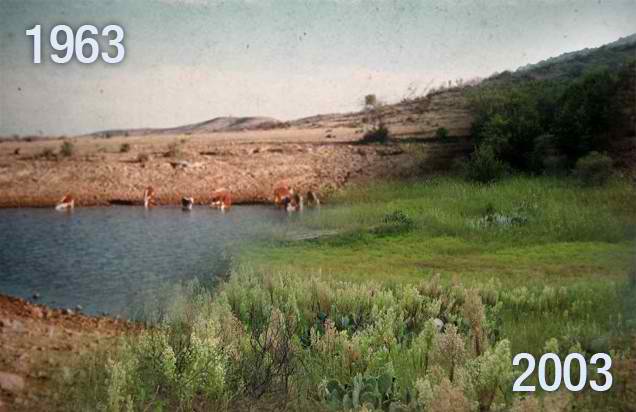
Such advancements in bio-metrics will make it more difficult to be anonymous and thus more easily controlled by the technocratic engineers of the global panopticon.
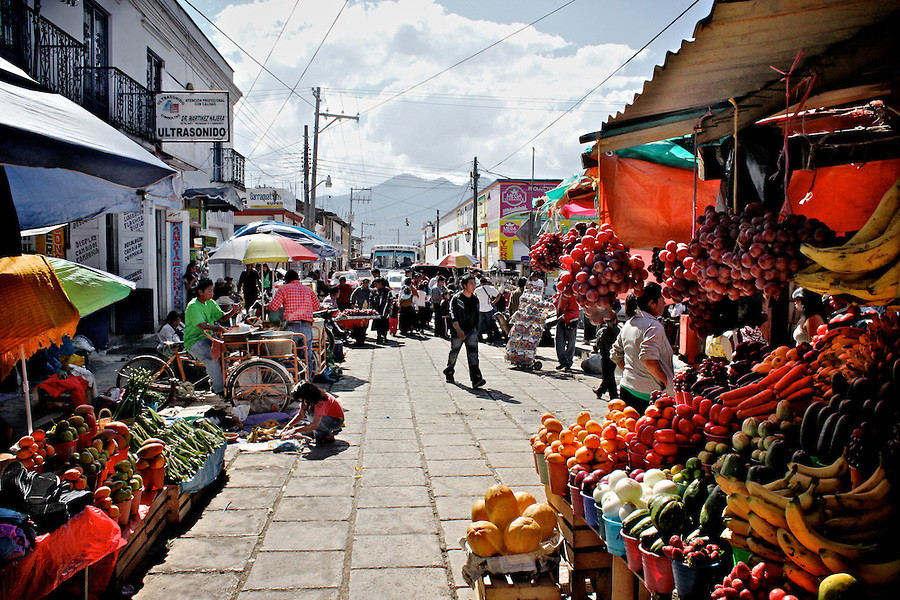
We only need to look to China’s social credit system to see where this is all going:
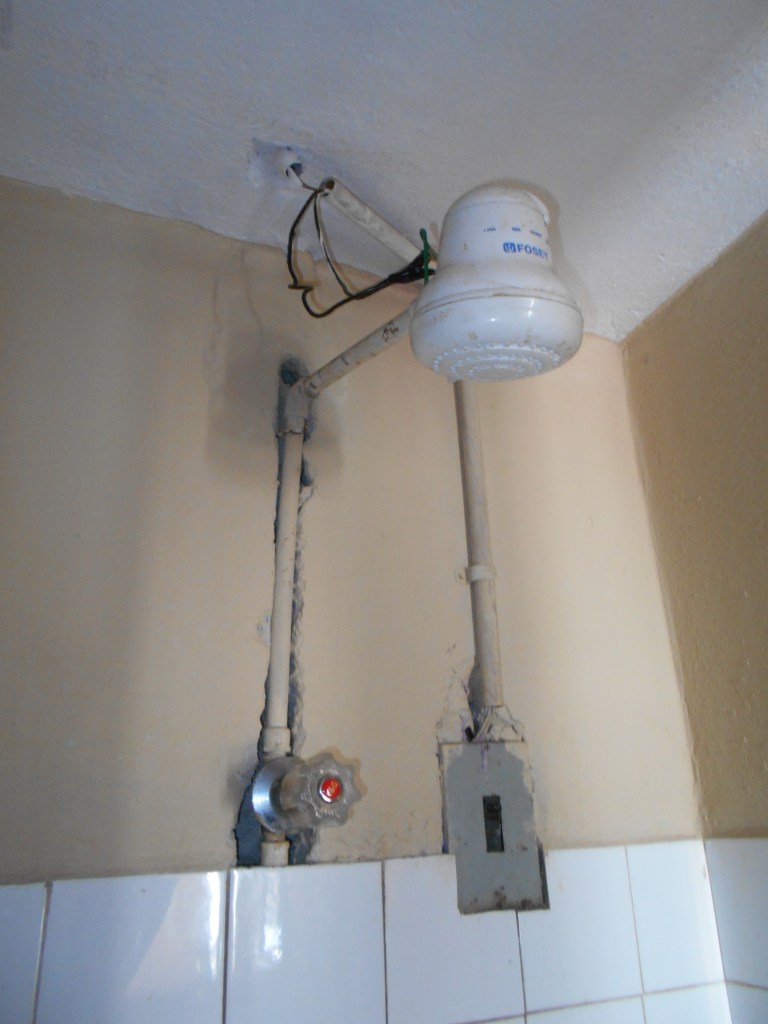
What’s Your Social Credit Score?

Frontline: In the Age of AI

Using a passport with a broken chip will not prevent the Corporate Government watchers from logging your entry into a country but it is a small act of resistance against further intrusion on our lives and freedom.

Avoiding Yellow Fever Vaccination – Why I decided to fly to South America

My first plan to sail to South America had fallen through.

My next plan was to bus through Central America. I decided against taking the bus upon learning more about what was involved…

Upon researching my potential bus route I learned that taking the bus all the way to South America was not possible because of the “no man’s land” known as the Darian Gap. While there are ways through, I ultimately decided not to travel through Central America. Busing would take a long time. I would be spending many days having to deal with border checks and fees. I would be getting irradiated by cell phones/WiFi the whole time. Additionally, I would have to pay for accommodations along the way and try to find healthy chemical-free food. My chances of ending up in a dangerous city increased as I would be traveling through many cities on the bus. An article online claimed that the pollution from busing all that distance would be worse than flying, from a carbon emissions perspective.

In summary: it would take longer, probably cost more, be more dangerous, be more hassle and likely have a bigger carbon footprint. Several friends suggested to me that I just fly to where I want to go.

The deal breaker for me though was the Yellow Fever vaccine requirement of several countries that I would be traveling through on the bus.

I have a dead sibling, primarily due to vaccine injury. I know many parents who have told me of adverse impacts on their children due to vaccination. If you need any convincing of the corruption of drug companies and the danger of vaccination, I suggest you check out the documentary VAXXED and the ongoing investigations into the vaccine/drug industry by the journalist Del Bigtree.

VACCINE REQUIREMENTS

After some online research I learned that these South American countries have a risk of Yellow Fever transmission by mosquitoes:

Argentina
Bolivia
Brazil
Colombia
Ecuador
French Guiana
Guyana
Panama
Paraguay
Peru
Suriname
Trinidad and Tobago
Venezuela

CDC Map

These are tropical areas along the equator. If I entered any one of these countries (starting with lower-Panama, if coming from the North) I would need to have a “yellow book” vaccine certificate to enter any of these countries:

Bolivia, Colombia, French Guyana, Guyana, Paraguay, Suriname: Source

So basically there would be no way of busing through South America without addressing the vaccine issue.

The only way to avoid being vaccinated is to get a doctor to fill out paper work stating that I am allergic to one or more of the components in the vaccine, including eggs, egg products, chicken proteins, gelatin or the latex used in the stopper of the vaccine bottle. Alternately I need to show that I am in an immunocompromised condition. Contraindications include:

  • Allergy to vaccine component
  • Age <6 months
  • Symptomatic HIV infection or CD4 T-lymphocytes <200/mm (or <15% of total in children aged <6 years)
  • Thymus disorder associated with abnormal immune-cell function
  • Primary immunodeficiencies
  • Malignant neoplasms
  • Transplantation
  • Immunosuppressive and immunomodulatory therapies

The doctor would need to fill out an exemption form…

A friend of mine was in Ecuador. She wanted to travel to Bolivia but would not get the Yellow Fever vaccine. She was able to pay a doctor to fill out the paperwork for her to get the exemption. She was not tested for allergies nor did she do any other official proceedings. If you know a doctor who defends the freedom of patients to opt out of vaccination, this may be an option for you too.

VACCINE DANGERS

I found this video. It is specific to the dangers of the Yellow Fever vaccine (start at 49 minutes, 14 seconds in). It is about the documentary Malcolm is a Little Unwell, which charts the descent into madness of veteran foreign correspondent Malcolm Brabant after a routine Yellow Fever vaccine for an assignment in Africa.

VACCINATION IN CONTEXT

I have read the data on Yellow Fever.

I don’t conceptually have a problem with medical personnel designing vaccines and making recommendations for their use (though I prefer natural selection to mass vaccination). The problem is when vaccines become mandatory. If we are expected to inject a substance that carries a risk of death, major neurological health issues and other problems, we should be given the option to opt out of vaccination.

I would prefer to take my chances with the Yellow Fever transmitting mosquitoes. At least in that situation I have some control over the risk. I can wear protective clothing and apply mosquito repellent.

Certainly after reading this horror story: “A mass sterilization exercise’: Kenyan doctors find anti-fertility agent in UN tetanus vaccine,” about vaccines being used to sterilize women without their knowledge in Africa, I am even more suspicious of any vaccine program. (Note: I wanted to know if this incident was real. I emailed the Kenya Catholic Doctors Association mentioned in the article. As is the norm these days, I did not receive a reply. I have heard from a whistle-blower within the biotech industry about an application for transgenic crops designed with the ability to induce sterility after people consumed the engineered plants. Such crops would be delivered to countries with a “population problem.” I consider the Kenya story plausible.)

I know from my family’s experience and the experiences of many others that vaccination is dangerous and should not be required of anyone.

The rational for vaccination is that it saves more lives than are lost due to vaccine injury. This seems like it could be true in some situations. Unfortunately pharmaceutical corruption and the profit motive above all else has made vaccination a dangerous prospect. The companies that manufacture vaccines are not liable for any harm caused and thus have little incentive to make a safe product. There are also a whole variety of dangerous substances in vaccines.

While the vaccine programs of the past may have saved many lives, the same is increasingly difficult to claim today. If fact the opposite may be true: that the vaccine programs of today have cost many lives and harmed many more.

Whatever the truth may be and whatever your personal beliefs are regarding who you trust, we should always have ownership over our bodies and that of our children. I will continue to resist mandatory vaccinations and fight for the freedom to choose what (if anything) is injected into my body by our corporate governments.

THE DECISION TO FLY

Though I was somewhat interested in seeing the land and people of Central America, my time in Mesoamerica gave me a pretty good idea of what to expect. I knew that I did not want to live in the tropics due to the heat and humidity, tropical diseases, poisoness snakes and other dangerous wildlife. I prefer Mediterranean, subtropical or temperate climates. Based on these preferences I knew I would skip over the equatorial tropical areas as a long term home.

I did not have a doctor who could help me with the vaccine exemption paperwork. I also did not know how difficult it would be to find one. So I thought it best to pass over the tropical zones requiring vaccination.

I looked into traveling by freighter but this was slow and very expensive.

I also considered going down to the docks in Livingston, Guatemala to see if I could get a sailboat ride. I was tempted to do this but decided against it. I don’t fancy the idea of hanging around port cities. It would also probably take several different shorter trips to get to South America. I might still have to deal with the vaccine issue when coming into port. It would also be difficult to convince a boat captain to turn off his radio frequency emitting devices while we travel for several days. If I was seeking adventure travel I might have chosen this option but I am seeking sanctuary, not adventure. I expect that in the future I will get my fill of adventure.

I hate flying due to airport security, cost of flying, being exposed to high levels of electromagnetic radiation, and the fast pace of transit via airplane. With flying, the focus is just to arrive at a destination rather than appreciate the journey.

Despite my reservations about flying, it seemed like the best option.

Airplane Warning – Mandatory Spraying of Toxins

If they don’t get you with their vaccinations, they will get you with their electromagnetic radiation and biocides……

After some research I made the decision to explore the Andes mountains, the Southern Cone (Cono Sur) and areas west of the Andes for a place of sanctuary from the madness of the modern world.

I choose this region because of the climate (I prefer temperate/Mediterranean climates), the lack of tropical diseases, and the low human population density (in many parts) with large regions of land far from cities. Some places in this area remain geographically isolated and subsistence lifestyles can still be found. I figured that it would be better to live in a place with high-resiliency, with the population already living off of the land, then to remain enmeshed within a society that is totally dependent on an unsustainable system that will collapse. Better to live close to the Earth. Those who have not forgotten how to live in Nature stand the best chance of survival.

I chose to fly from Guatemala to Argentina because I had read about some countries requiring the fumigation of passengers with pesticides before entering the country. I reviewed the U.S. Department of Transportation list of countries that use “disinsection.” Uruguay, Chile, and Peru (some in country flights) were listed as countries that fumigate airplanes. I had talked with the airline company Avianca about flying to Argentina. The person that I spoke to on the phone said that they did not have access to information about which flights are sprayed but thought that it was not likely to occur if flying to Argentina. With the U.S. Department of Transportation information and the conversation with the Avianca sales representative, I thought that I was safe.

I was wrong. At the end of my flight to South America, the plane was unexpectedly fumigated with a poison.

I wrote the following letter and sent it to the Ministry of Agriculture, Ministry of Health, Ministry of Tourism, the airline company Avianca, an international aviation body, airports and newspapers. It would probably require a lawsuit to actually get anyone’s attention. Nevertheless, the letter serves as a warning for other travelers seeking ways of moving through our insane world. In the future I will be sure to contact all airports on the itinerary, and the transportation authorities of each country. In retrospect, I think landing in Peru would have been the better choice.

MY LETTER

I am writing due to a recent experience I had flying into Argentina.

At the end of the flight I was sprayed with a poisoness pesticide along with the rest of the passengers on an Avianca flight. The particular toxin was not identified which prevents me from researching the toxicology data. The only thing we were told is that the World Health Organization (WHO) has approved the poison for arbitrary application upon the human population. Based on subsequent research I assume the spray was some type of synthetic pyrethroid, a nerve toxin.

Like many regulatory agencies the WHO has conflicts of interest due to special interest groups (i.e. corporations) that have compromised and in some cases captured the regulatory body. The WHO already has a poor track record with its negligence in handling the severe threat from electromagnetic radiation and the official ongoing claim by WHO that vaccines are safe despite the overwhelming science based evidence to the contrary.

If the WHO is saying that pesticides are safe to spray on people, then the WHO only further erodes what remaining credibility this bureaucracy may hold. It only takes a tiny bit of common sense to realize that a toxin that kills other life forms is likely to be harmful to ourselves too.

“This practice is insanity,” agrees Dr. Jack Thrasher, an immunotoxicologist in Alto, N.M.

Sheila Daar, director of the Bio-Integral Resource Center in Berkeley, Calif. notes that insects rapidly develop resistance to pesticides. That is just one reason why many experts point out that pesticide use on planes is not only dangerous, but useless.

Assistant Surgeon General Donald Hopkins said that “disinsection of aircraft has never been shown to be highly effective in disease control and prevention.”

Danger in the Air: Pesticide use on domestic airplanes may make flying hazardous to your health by Karin Winegar, Mother Jones

In humanities attempts to control all of life it is apparent that our species will take extreme actions in the war against nature. We have become pathological in our relationship to ourselves, each other and the rest of life on Earth. The mandatory spraying of poisons on civilians as they enter a country is a clear example of this pathology.

How many people need to die of cancer, suffer neurological damage, be rendered infertile or have their DNA damaged before such idiotic practices are stopped? How many ecosystems will be harmed or species will have to go extinct before we decide to stop buying and using these toxins? Our species is on a direct course for self destruction and we are taking many other creatures with us.

I am angry with the Argentine (Health Authorities/Agricultural Authorities) for having this policy in place. I am disgusted with Avianca airlines for agreeing to spray poisons on its passengers.

I specifically did research to find a place in South America to fly to that did not fumigate its passengers. On this list by the U.S. Department of Transportation, Argentina was not mentioned. I had thought that I would be safe flying there. I avoided flying to Chile and Uruguay because they were on the list of countries that poison arrivals by airplane. I had talked to an Avianca sales representative before the flight who did not think that they would fumigate a flight to Argentina. (Though they said that they were not sure.) The sales representatives should have this information in their database.

I should have flown to somewhere else. As a consequence I will be sharing my experience through my social networks. I will advise people to avoid flying into Argentina and other countries who find it acceptable to spray poisons on travelers. I will also advise people to find alternate means of transport, using travel companies that have enough respect for people’s health not to poison them.

Angry and disgusted,

Pre-flight spraying.

ARTICLES

Pesticides on Planes: How Airlines Are Softly Killing Us by Maryam Henein

U.S. Initiates Effort to Halt Airline Insecticide Spraying by Martin Tolchin, New York Times

Government Advises Airlines to Spray Pesticides on Passengers by Jonathan Landsman

Exposure to Pesticides on Aircraft by the Center for Disease Control and Prevention

Should Fliers Worry About Pesticide Spraying on Planes? by Bill McGee, USA Today

Pesticide on Planes: Parents Call for Changes After Cabin Fumigated With Passengers on Board by Rosa Marchitelli, CBC News

Design a site like this with WordPress.com
Get started